The large iron wok, a staple in kitchens across Asia and increasingly popular globally, represents more than just a cooking vessel. It embodies centuries of culinary tradition, offering a unique blend of durability, versatility, and heat retention that makes it ideal for a vast array of cooking techniques. Understanding the nuances of a large iron wok – from seasoning to optimal usage – unlocks a world of flavorful possibilities, impacting both professional chefs and home cooks alike.
Globally, the demand for authentic culinary experiences is on the rise, driving interest in traditional cooking tools like the large iron wok. According to the UNWTO, culinary tourism is a significant driver of economic growth in many regions. The increasing focus on healthy eating and home cooking further fuels this demand. The large iron wok’s ability to facilitate stir-frying, steaming, and deep-frying with minimal oil aligns with modern health-conscious lifestyles, making it a relevant and sought-after kitchen tool.
However, navigating the market for large iron woks can be challenging. Variations in material quality, construction, and thickness can drastically impact performance. Many consumers are unaware of proper seasoning and maintenance techniques, leading to frustration and underutilization. This guide aims to demystify the large iron wok, providing a comprehensive overview of its benefits, applications, and best practices for long-term enjoyment.
The Significance of the large iron wok
The large iron wok holds a prominent place in culinary traditions, particularly in Asian cuisine. Its unique shape and material properties aren't accidental; they are the result of centuries of refinement to maximize cooking efficiency and flavor development. From bustling street food stalls to Michelin-starred restaurants, the large iron wok is revered for its versatility and ability to deliver exceptional results.
Beyond its practical function, the large iron wok is often associated with family, community, and cultural heritage. Passing down a well-seasoned large iron wok through generations is a common practice, symbolizing a legacy of culinary expertise. This emotional connection adds to the wok’s appeal, making it more than just a kitchen tool – it’s a cherished heirloom.
Defining the large iron wok
A large iron wok is a round-bottomed cooking pan traditionally made from cast iron, though carbon steel variations are also common. The defining feature is its sloped sides, which facilitate efficient tossing and stirring, crucial for stir-frying. The term "large" generally refers to woks with a diameter of 14 inches or greater, providing ample space for cooking large quantities of food.
Unlike many modern non-stick pans, a large iron wok requires seasoning – a process of repeatedly heating and coating the surface with oil to create a natural, non-stick patina. This seasoning not only prevents food from sticking but also imparts a unique flavor to the dishes prepared within it. The seasoning process requires consistent maintenance, but the rewards are well worth the effort.
Its connection to modern industry lies in the ongoing demand for durable, efficient, and versatile cooking solutions. The large iron wok’s ability to withstand high heat and its suitability for various cooking methods make it a preferred choice for professional kitchens and culinary schools worldwide. Furthermore, the demand for traditional cooking methods is increasing with a greater appreciation for authentic flavors.
Core Characteristics of a large iron wok
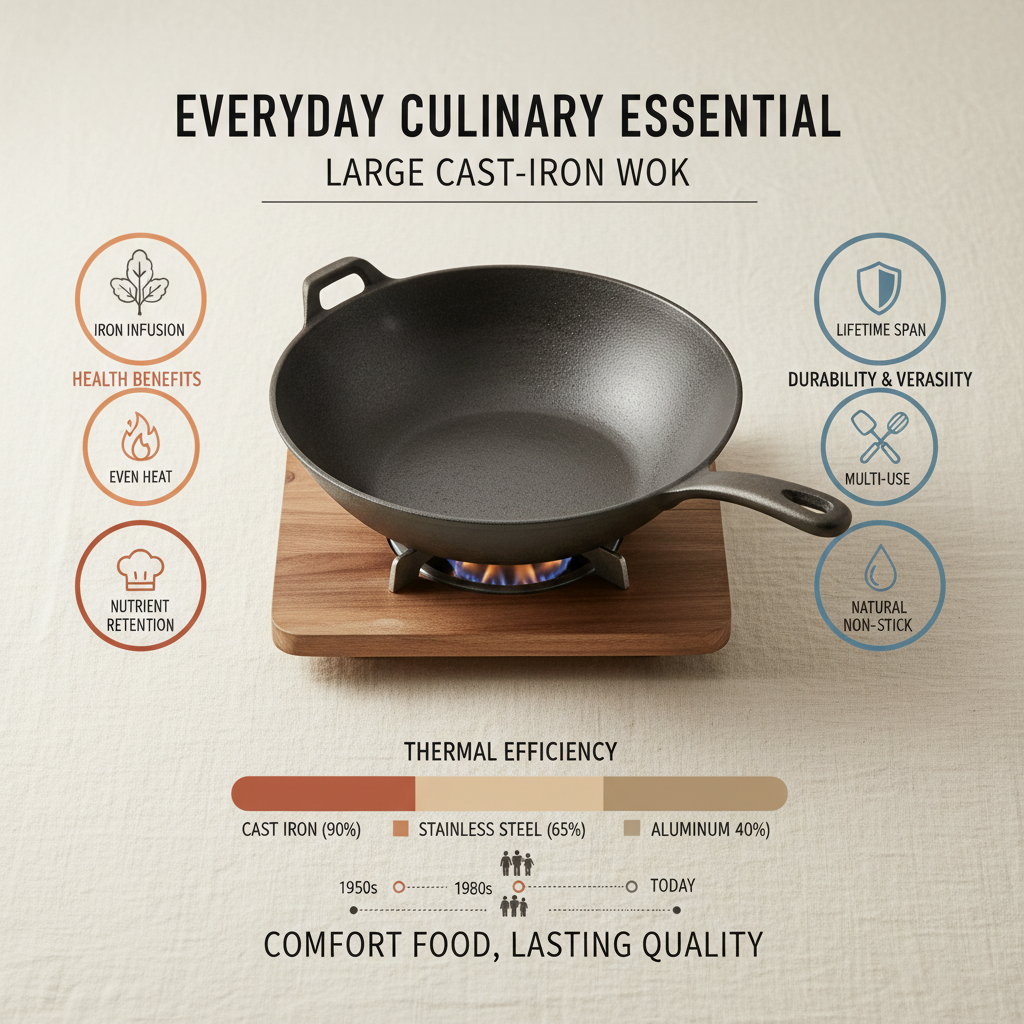
The most important characteristics of a large iron wok are its material composition and its shape. Traditionally, these woks are made of cast iron or carbon steel. Cast iron offers excellent heat retention but is heavier. Carbon steel heats up quickly and is lighter, but requires more diligent seasoning to prevent rusting. Both materials, when properly maintained, provide exceptional cooking performance.
Another defining characteristic is the round bottom, which allows for concentrated heat in the center of the wok while the sides remain cooler. This temperature gradient is vital for stir-frying, enabling quick cooking and preventing food from steaming. The sloping sides also make it easy to toss and flip ingredients, ensuring even cooking.
The size of the wok is also critical. A large iron wok allows for larger batch cooking, making it efficient for family meals or professional use. However, a larger wok also requires more heat to maintain a consistent cooking temperature. Therefore, choosing the appropriate size depends on individual cooking needs and stove capabilities.
Key Factors Influencing large iron wok Performance
Durability is a cornerstone of the large iron wok's appeal. A well-maintained wok can last for generations, becoming a family heirloom. The inherent strength of cast iron or carbon steel, combined with proper seasoning, makes it resistant to warping, cracking, and corrosion.
Heat Retention is another critical factor. Iron’s ability to store and distribute heat evenly ensures consistent cooking temperatures, even when adding cold ingredients. This characteristic is particularly important for stir-frying, where maintaining high heat is essential for achieving the desired texture and flavor.
large iron wok Performance Metrics
Global Applications of the large iron wok
The large iron wok is central to many Asian cuisines, including Chinese, Thai, Vietnamese, and Korean. In China, it's the preferred vessel for stir-frying, steaming, and deep-frying, contributing to the signature flavors and textures of countless regional dishes. Throughout Southeast Asia, it’s equally vital, used for everything from Pad Thai to curries.
Beyond Asia, the large iron wok is gaining popularity in Western cuisines. Professional chefs are increasingly incorporating it into their cooking routines, recognizing its ability to deliver intense flavors and textures. In remote industrial zones and large-scale catering operations, the large iron wok is favored for its efficiency and capacity to cook large batches of food quickly.
The Lasting Value of a large iron wok
The tangible benefits of owning a large iron wok are numerous. Cost-effectively, a well-maintained wok can outlast several non-stick pans, representing a significant long-term savings. Its durability translates to reduced waste and a lower environmental impact.
Moreover, the large iron wok promotes healthier cooking by reducing the need for excessive oil. The sloped sides and efficient heat distribution enable quick cooking, preserving nutrients and minimizing the formation of harmful compounds. The emotional connection associated with owning and using a large iron wok – a symbol of tradition, family, and culinary passion – adds immeasurable value.
The reliability and consistent performance of a large iron wok build trust and confidence in the kitchen. Knowing that it will consistently deliver exceptional results fosters creativity and encourages experimentation with new recipes and techniques.
Future Trends in large iron wok Technology
Innovations in materials science are leading to the development of new large iron wok alloys that offer improved heat conductivity, lighter weight, and enhanced rust resistance. Some manufacturers are exploring pre-seasoned woks to reduce the initial effort required by users.
Digital integration is also emerging. Smart woks with built-in temperature sensors and connectivity to mobile apps are being developed, providing real-time cooking data and guided recipes. Sustainability is a key driver, with a growing emphasis on sourcing responsibly produced iron and reducing manufacturing waste.
Automation in wok cooking, while still in its early stages, is being explored for commercial applications, aiming to improve efficiency and consistency in large-scale food preparation. These advancements promise to enhance the user experience and further solidify the large iron wok’s position as a culinary essential.
Key Comparison of large iron wok Material and Features
| Material |
Weight |
Seasoning Difficulty |
Heat Retention |
| Cast Iron |
Heavy |
Moderate |
Excellent (9/10) |
| Carbon Steel |
Light |
High |
Very Good (8/10) |
| Stainless Steel (with Iron Core) |
Medium |
Low |
Good (7/10) |
| Enamel Coated Cast Iron |
Heavy |
Very Low |
Moderate (6/10) |
| Hybrid (Carbon Steel/Stainless) |
Light-Medium |
Moderate |
Very Good (8.5/10) |
| Traditional Hand-Hammered Iron |
Medium |
High |
Excellent (9.5/10) |
FAQS
The initial seasoning process is crucial for a large iron wok. Start by thoroughly washing the wok with hot, soapy water to remove any factory coatings. Then, heat the wok on high until it turns blue, indicating impurities are burning off. Coat the entire surface with a thin layer of high smoke-point oil (like peanut or canola oil), and continue heating until it smokes. Repeat this process 3-5 times, allowing the wok to cool between each coat. This builds a strong, protective layer.
Rust is the enemy of a large iron wok! After each use, thoroughly dry the wok with a clean cloth. Then, apply a very light coat of oil to the entire surface. Storing the wok in a dry environment is essential. If rust does appear, scrub it off with steel wool and re-season the affected area. Consistent oiling is the best preventative measure.
While traditionally discouraged, modern dish soap can be used sparingly on a well-seasoned large iron wok. The key is to use hot water, a small amount of mild soap, and to dry and re-oil the wok immediately after washing. Avoid harsh detergents or abrasive scrubbers, which can damage the seasoning.
For seasoning, choose oils with a high smoke point, like peanut oil, canola oil, vegetable oil, or grapeseed oil. These oils polymerize when heated, creating a durable, non-stick surface. For cooking, the same oils are suitable, but you can also use avocado oil or sunflower oil. Avoid olive oil, which has a lower smoke point and can become rancid.
Yes, a flat-bottomed large iron wok is essential for use on induction cooktops. Induction cooktops require direct contact with a ferromagnetic surface (like iron). A round-bottomed wok won't make sufficient contact and won't heat effectively. Look for woks specifically designed for induction cooktops.
The frequency of re-seasoning depends on how often you use and wash your wok. If you cook frequently and wash it regularly, you may need to re-season it every few months. If you notice areas where the seasoning is wearing thin or rust is forming, it’s time to re-season. A light re-seasoning after each use helps maintain the patina.
Conclusion
The large iron wok represents a remarkable blend of tradition, functionality, and culinary potential. From its historical roots to its modern applications, this versatile cooking vessel continues to empower chefs and home cooks alike. Understanding its unique characteristics – durability, heat retention, and the importance of proper seasoning – unlocks a world of flavorful possibilities, contributing to both culinary excellence and long-term value.
Investing in a large iron wok isn’t just about acquiring a kitchen tool; it’s about embracing a culinary heritage and committing to a sustainable, healthy cooking practice. As technology advances and materials evolve, the large iron wok will undoubtedly continue to adapt and innovate, remaining a cornerstone of kitchens around the globe. Visit our website at Foundry Asia to explore our selection of high-quality large iron woks and embark on your culinary journey today.