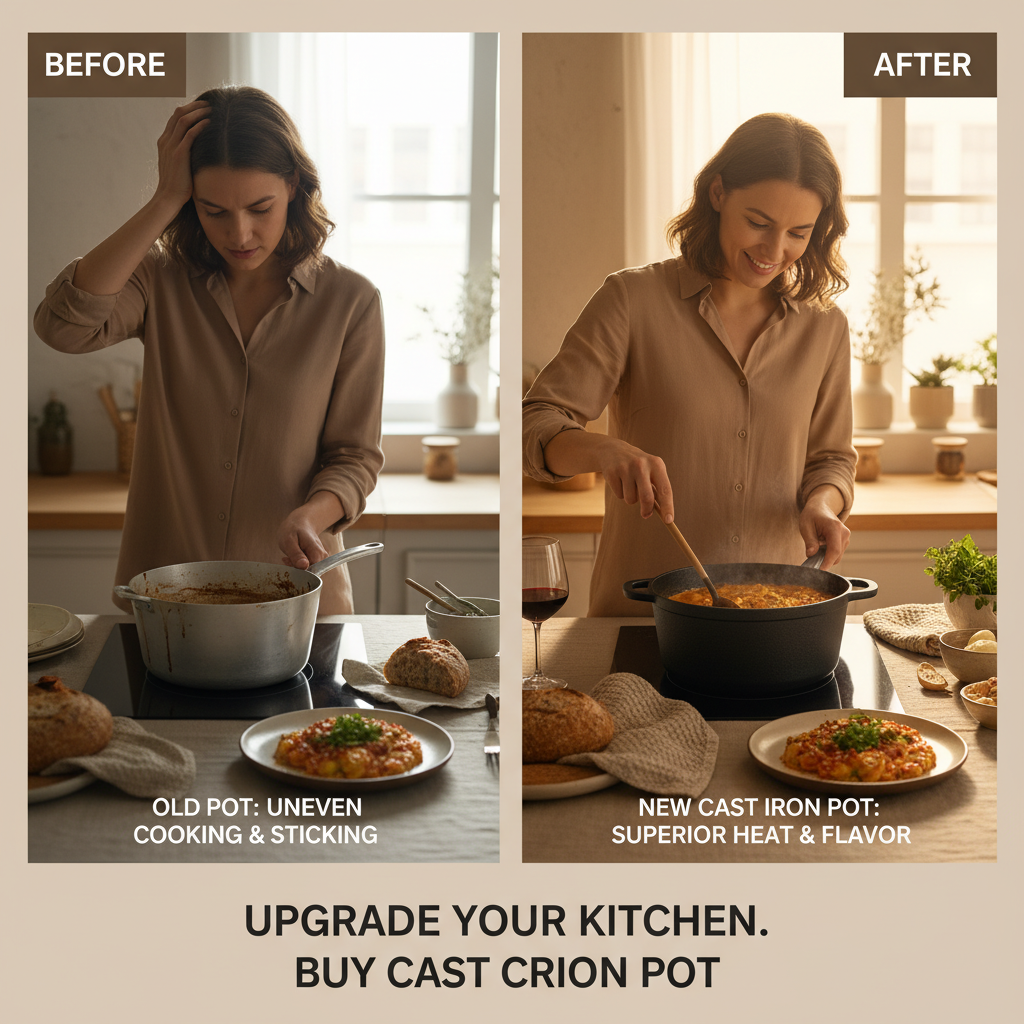
When you decide to buy cast iron pot collections for your kitchen, you aren't just purchasing cookware; you are investing in a culinary legacy. Cast iron has remained a cornerstone of professional and home kitchens for centuries due to its unparalleled heat retention and versatility, making it an essential tool for anyone serious about searing, braising, and baking.
Globally, the resurgence of traditional cooking methods has driven a significant increase in demand for high-quality metalware. Modern consumers are moving away from disposable non-stick coatings in favor of sustainable, lifelong tools. This shift emphasizes a return to durability and health-conscious cooking, where the natural seasoning of a pot replaces synthetic chemicals.
Understanding the nuances of different cast iron vessels—from the deep capacity of a Dutch Oven to the high-heat efficiency of a Skillet—is key to maximizing your gastronomic results. Whether you are a professional chef or a home enthusiast, knowing exactly what to look for when you buy cast iron pot sets will ensure your investment lasts for generations.
The Global Market Demand for Cast Iron Cookware
The global movement toward "slow food" and sustainable living has significantly boosted the decision of consumers to buy cast iron pot products. In North America and Europe, there is a documented trend toward removing PFAS and PFOA from the kitchen, leading to a spike in ISO-standardized cast iron production. The reliability of these products in extreme environments makes them a staple not only in luxury kitchens but also in rugged, outdoor cooking scenarios.
Moreover, the industrial capacity for high-grade metal casting has evolved. Modern foundries now utilize advanced metallurgy to reduce the excessive weight of traditional pots without sacrificing the thermal mass that makes cast iron so desirable. This balance of traditional utility and modern engineering is why the market for these pots continues to expand across Asia and the West.
Defining the Core Value of Premium Cast Iron
At its simplest, when you buy cast iron pot hardware, you are acquiring a material known for its high carbon content, which allows it to absorb and radiate heat evenly. Unlike aluminum or stainless steel, which can develop "hot spots," a well-manufactured cast iron vessel distributes thermal energy across its entire surface, ensuring that food is cooked consistently from the center to the edges.
Beyond the physics of heat, there is a humanitarian and practical dimension to this material. In many parts of the world, cast iron is the only cookware that can survive open-fire cooking and decades of heavy use without needing replacement. This durability reduces waste and provides a reliable means of food preparation in remote or resource-limited industrial zones.
The "meaning" of owning a cast iron pot today is also tied to the concept of the "seasoned surface." Through the polymerization of fats, the iron develops a natural, non-stick patina. This biological and chemical process transforms a raw piece of metal into a living tool that improves with age, creating a deeper connection between the cook and their equipment.
Key Factors When You Buy Cast Iron Pot Sets
Thermal Mass and Heat Retention: The primary reason users buy cast iron pot options is for their ability to hold heat. This is critical for searing meats at high temperatures or maintaining a steady simmer for stews in a Dutch Oven.
Material Purity and Casting Quality: When you buy cast iron pot items, you must examine the surface texture. High-quality casting avoids pits and air bubbles, which prevents food from sticking and ensures the seasoning adheres evenly across the surface.
Versatility of Design: From the wide flare of a Cast Iron Skillet to the deep walls of a Casserole pot, the geometry of the vessel dictates its use. A versatile set allows a transition from the stovetop to the oven and even to a campfire without any risk of structural failure.
Performance Metrics Across Different Pot Types
Different shapes of cast iron serve distinct purposes. A Cast Iron Wok, for instance, is designed for rapid heat transfer and high-temperature tossing, whereas a Cast Iron Dutch Oven is optimized for moisture retention and slow-cooking. When users buy cast iron pot varieties, they are choosing specific thermal behaviors based on their culinary goals.
To quantify this, we look at heat distribution, durability, and maintenance requirements. While a grill pan offers the best searing ridges, it requires more effort to clean than a smooth-bottomed frying pan. The following data illustrates how different cast iron products perform across key industrial benchmarks.
Performance Comparison: Why Buy Cast Iron Pot Varieties
Real-World Applications and Culinary Use Cases
In professional restaurant environments, chefs buy cast iron pot equipment for its reliability during high-volume service. A cast iron skillet can take a steak from the high-heat burner to the oven for finishing without losing a single degree of temperature, ensuring a perfect medium-rare crust.
Beyond the kitchen, these tools are invaluable in outdoor and disaster-relief operations. Because they can be used over open flames, charcoal, or induction hobs, they provide a universal cooking solution. In remote industrial zones, the sheer toughness of cast iron means that equipment doesn't need frequent replacement, reducing the logistics chain and operational costs.
Long-Term Sustainability and Economic Value
From an economic perspective, the decision to buy cast iron pot sets is a move toward "buy it once" consumerism. While the initial cost may be higher than a cheap Teflon pan, the lifespan of cast iron is measured in decades, not years. This drastically lowers the cost-per-use ratio, making it the most financially sound choice for a household.
Environmentally, cast iron is one of the most sustainable materials available. It is 100% recyclable and does not leach toxic chemicals into the food or the environment during its lifecycle. The production of cast iron, while energy-intensive, is offset by the fact that the product never ends up in a landfill.
Moreover, there is an emotional value to this durability. A cast iron pot often becomes a family heirloom, passed down through generations. This creates a legacy of quality and trust, contrasting sharply with the planned obsolescence of modern plastic and composite cookware.
Future Innovations in Metal Casting Technology
The future of why people buy cast iron pot products is being shaped by green energy and automation. Foundries are now integrating induction melting and carbon-capture technologies to reduce the footprint of iron production. This ensures that the "traditional" pot of tomorrow is produced with 21st-century ethics.
Innovations in enamel coatings are also expanding. While raw iron is classic, high-tech vitreous enamel allows for easier cleaning and prevents rust without sacrificing the heat retention properties of the core. This hybrid approach makes the products more accessible to a wider range of users who may find traditional seasoning too demanding.
Digital transformation in the manufacturing process, such as 3D sand printing for molds, allows for more ergonomic designs. We are seeing pots with better handle balance and precision-fit lids that create a near-perfect vacuum seal, further enhancing the braising capabilities of the modern Dutch oven.
Comparison of Cast Iron Material Variants and Performance
| Material Type |
Thermal Retention |
Maintenance Level |
Average Lifespan |
| Raw Cast Iron |
Extreme (10/10) |
High (Seasoning Req.) |
Lifetime+ |
| Enameled Cast Iron |
High (9/10) |
Low (Easy Clean) |
20-50 Years |
| Seasoned Pre-coated |
Extreme (10/10) |
Medium |
Lifetime |
| Lightweight Cast Alloy |
Medium (7/10) |
Medium |
15-30 Years |
| Industrial Grade Iron |
Extreme (10/10) |
High |
Indefinite |
| Hybrid Cast-Steel |
High (8/10) |
Medium |
30+ Years |
FAQS
Cast iron offers superior heat retention and durability. Unlike non-stick pans that peel and release chemicals after a few years, cast iron develops a natural non-stick surface through seasoning and can literally last for several generations. It is also safer for high-heat cooking, where non-stick coatings often break down.
While it requires more care than stainless steel—specifically avoiding soaking in water and using oil for seasoning—it is quite simple once you understand the process. Regular cleaning with a brush and a light coat of oil after use ensures the pot remains rust-free and non-stick.
Yes, cast iron is highly compatible with induction cooktops because it is ferromagnetic. In fact, many users find that the heavy base of a cast iron pot provides more stable contact with induction surfaces than thinner pans, leading to better energy efficiency.
A Dutch Oven is typically heavier with a tighter-fitting lid, designed for searing and then slow-braising in the oven. A casserole pot is often used for baking and serving, sometimes with a shallower profile. When you buy cast iron pot options, choose the Dutch Oven for versatility and the casserole for specific oven-to-table dishes.
A properly seasoned pot will have a smooth, slightly glossy black or dark brown surface. Water should bead up on the surface rather than soaking in, and eggs or oils should slide easily across the pan without sticking. If it looks dull or grey, it may need another layer of seasoning.
It depends on your needs. Enameled pots are better for acidic foods (like tomato sauce) and are much easier to clean. Raw cast iron is better for high-heat searing, outdoor cooking, and those who want a completely natural, chemical-free surface that can be restored indefinitely.
Conclusion
Choosing to buy cast iron pot equipment is a decision that balances culinary performance with long-term sustainability. From the industrial precision of the casting process to the intuitive nature of seasoning, cast iron remains the gold standard for heat management in the kitchen. By investing in a variety of tools—such as Dutch Ovens, skillets, and woks—you equip yourself with a versatile toolkit capable of handling any recipe, from the simplest sear to the most complex slow-braise.
As we move toward a more eco-conscious future, the value of durable, non-toxic, and recyclable cookware will only increase. We recommend starting with a high-quality Dutch Oven and a skillet to experience the transformative power of thermal mass. To explore our professional-grade manufacturing and find the perfect vessel for your needs, visit our website: www.foundryasia.com