- 150m Southwards, West DingWei Road, Nanlou Village, Changan Town, GaoCheng Area, Shijiazhuang, HeBei, China
- monica@foundryasia.com
Feb . 28, 2026 01:55 Back to list
Exploring the Quality and Benefits of China No 8 Cast Iron Skillets
Understanding the Quality of China No. 8 Cast Iron Skillets
When it comes to cookware, cast iron skillets are renowned for their durability, heat retention, and versatility. Foundry Asia specializes in the production and export of high-quality cast iron cookware, including the popular China No. 8 cast iron skillet. This article will delve into the features, benefits, manufacturing processes, and quality control measures that make these skillets a preferred choice for both home cooks and professional chefs. We’ll explore why choosing a reliable supplier like Foundry Asia is crucial for sourcing top-tier cast iron products.
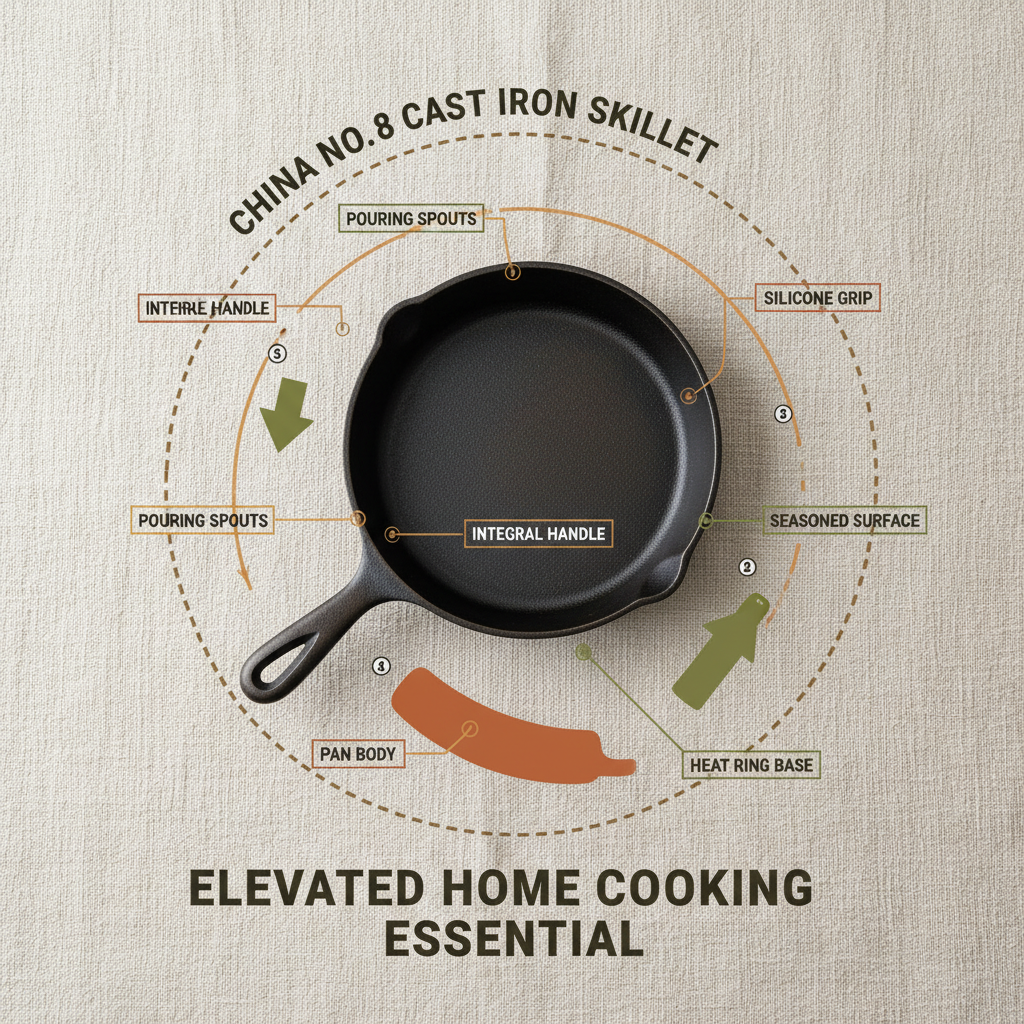
What Defines a China No. 8 Cast Iron Skillet?
The "No. 8" designation refers to the skillet’s diameter, typically around 10 inches. This size is considered ideal for general cooking tasks, providing ample surface area without being overly bulky. China No. 8 cast iron skillets are valued for their even heating, making them perfect for searing, frying, baking, and braising. They are also incredibly versatile – moving seamlessly from the stovetop to the oven to the campfire. Foundry Asia offers various finishes, including seasoned, unseasoned, and enamel-coated, catering to diverse customer preferences.
Key Highlights: Versatile for various cooking methods; excellent heat retention; durable and long-lasting; available in multiple finishes.
The Manufacturing Process at Foundry Asia
The production of a high-quality China No. 8 cast iron skillet involves several key stages. First, iron ore is melted and poured into molds to create the rough skillet shape. This is followed by grinding and polishing to remove imperfections. Seasoning, whether pre-applied or left as an option, involves coating the skillet with oil and baking it at high temperatures to create a natural non-stick surface. Foundry Asia utilizes advanced casting techniques and skilled craftsmanship to ensure consistent quality and dimensional accuracy.
Manufacturing Steps:
• Melting and casting of iron.
• Grinding and polishing for a smooth surface.
• Seasoning (optional) for a natural non-stick finish.
• Rigorous quality control checks throughout the process.
China No. 8 Cast Iron Skillet: Key Features & Specifications
Understanding the specifications is crucial when choosing a cast iron skillet. Here's a breakdown of typical features found in a quality China No. 8 skillet from Foundry Asia:
Quality Control: Ensuring a Superior Product
Foundry Asia implements a strict quality control system at every stage of the production process. This includes visual inspections for defects, dimensional checks to ensure accuracy, and rigorous testing for material composition. Skillets are assessed for surface smoothness, seasoning quality (if applicable), and overall structural integrity. This commitment to quality ensures that customers receive a product that meets the highest standards.
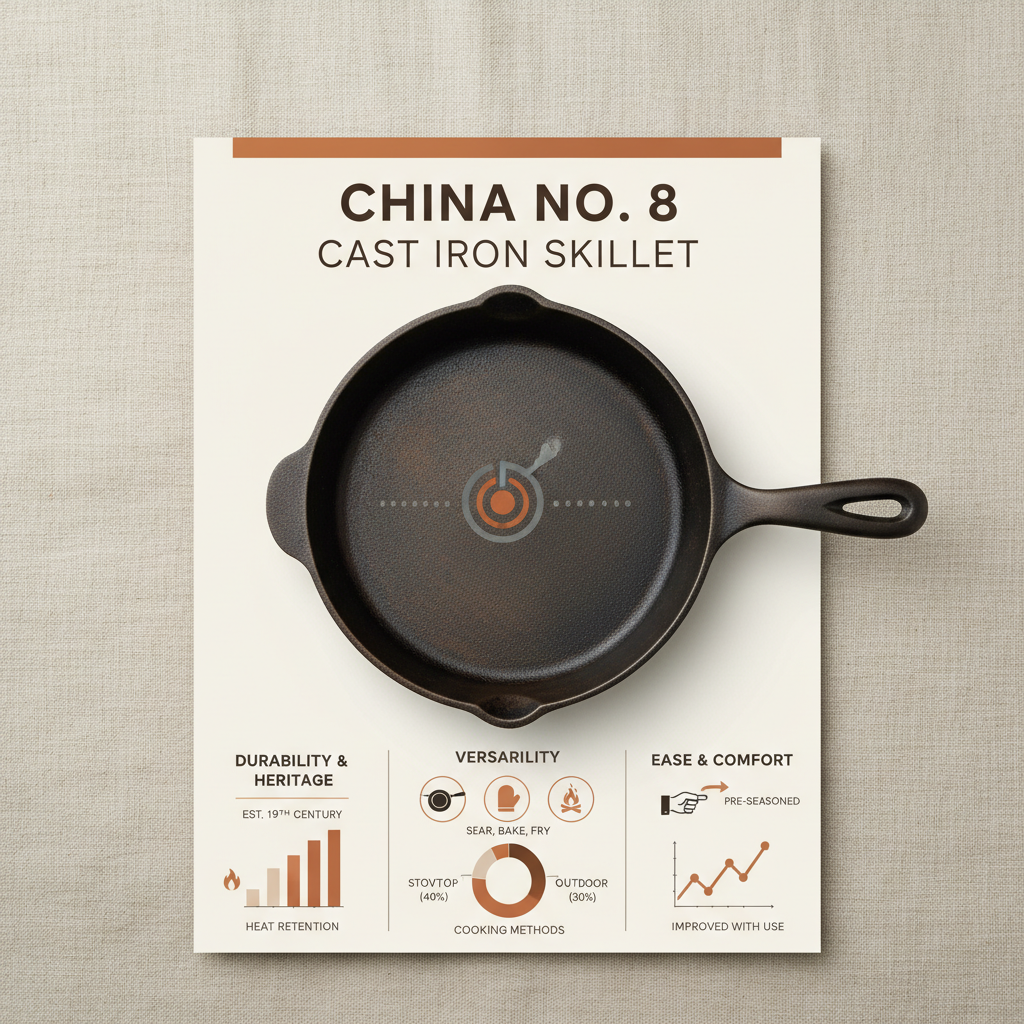
Why Choose Foundry Asia for Your Cast Iron Skillet Needs?
Choosing the right supplier is paramount when sourcing cast iron skillets. Foundry Asia offers a compelling combination of competitive pricing, high-quality products, and exceptional customer service. With a proven track record of exporting to global markets, they are well-equipped to handle large-volume orders and customized requests. Their dedication to quality control and commitment to sustainability make them a trusted partner for businesses worldwide.
Conclusion: The Trusted Source for Quality Cast Iron
For businesses and individuals seeking reliable, high-quality China No. 8 cast iron skillets, Foundry Asia stands as a premier choice. Their commitment to craftsmanship, rigorous quality control, and customer satisfaction ensures a product you can trust. Partner with Foundry Asia and experience the difference quality makes.
Frequently Asked Questions (FAQs)
What is the best way to season a cast iron skillet?
Seasoning a cast iron skillet involves applying a thin layer of oil (such as flaxseed oil, canola oil, or vegetable oil) to the entire surface, inside and out, and then baking it in the oven at a high temperature (typically 400-450°F) for at least an hour. This process creates a polymerized oil layer that protects the iron from rust and provides a natural non-stick surface. Repeat this process several times to build up a strong seasoning.
Can cast iron skillets be used on glass cooktops?
Yes, cast iron skillets can be used on glass cooktops, but it's important to exercise caution. Avoid dragging the skillet across the surface, as this can cause scratches. Lift and place the skillet gently. Also, avoid sudden temperature changes, as this can lead to thermal shock and potentially crack the glass cooktop.
How do I clean a cast iron skillet?
Avoid using soap on cast iron, as it can strip the seasoning. Instead, use hot water and a stiff brush or scraper to remove food particles. For stubborn residue, you can add a small amount of coarse salt to the water. Dry the skillet thoroughly and then lightly oil it to prevent rust. Foundry Asia recommends avoiding prolonged soaking in water.
What are the benefits of choosing seasoned cast iron skillets?
Seasoned cast iron skillets offer the convenience of a naturally non-stick surface right out of the box. This eliminates the need for extensive initial seasoning and makes cooking easier. A well-seasoned skillet also provides better protection against rust and corrosion, extending its lifespan.
-
China PC Light Cast Iron Wok Traditional Heat with Modern Weight
NewsApr.16,2026
-
Professional Guide to China Cleaning Cast Iron Wok Maintenance
NewsApr.09,2026
-
Explore the Benefits of a China Cast Iron Grilling Wok for Your Kitchen
NewsApr.07,2026
-
China Victoria Cast Iron Wok A Comprehensive Guide to Quality Cookware
NewsApr.04,2026
-
Discover the Superior Quality of China Enameled Cast Iron Wok Cookware
NewsMar.31,2026
-
Discover the Benefits of a China Cast Iron Wok with Lid for Authentic Cooking
NewsMar.28,2026