- 150m Southwards, West DingWei Road, Nanlou Village, Changan Town, GaoCheng Area, Shijiazhuang, HeBei, China
- monica@foundryasia.com
Oct . 08, 2025 22:35 Back to list
Introduce Of Cast Iron Matte Enamel Casseroles: Even Heat?
A Field Note on Cast Iron Matte Enamel Casseroles: What’s Changing—and What Still Matters
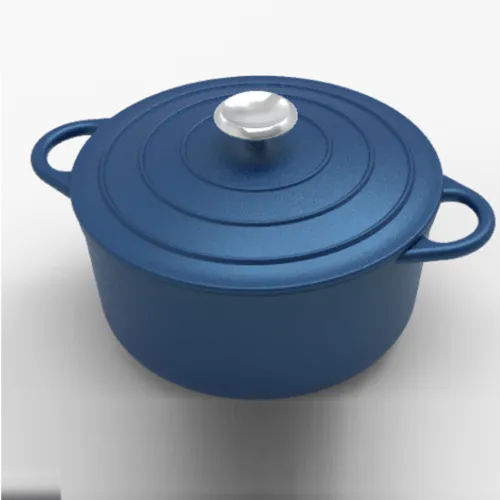
If you’ve been eyeing heavy-duty cookware lately, you’ve probably bumped into Introduce Of Cast Iron Matte Enamel Casseroles. To be honest, the category has been quietly evolving: thinner yet strong wall sections, matte micro-textured enamel interiors for grip and browning, and smarter QC than five years ago.
Industry trend snapshot
Chefs (and plenty of home cooks) are drifting toward matte enamel interiors—less glare, better fond development, easier seasoning-like behavior without actual seasoning. Induction is now baseline. And customization—colorways, laser logos, packaging—has moved from premium brands to OEM mid-tier. Surprisingly, lead times are improving as foundries automate pouring and enameling lines.
Technical build and process flow
Core material: high‑carbon gray cast iron (≈3.2–3.6% C, 1.9–2.5% Si). Casting via sand molds; then shot‑blasting and CNC gate removal. Enamel system: ground coat + matte cover coat, fired ≈800–840°C. Typical coating thickness ≈260–420 µm. Interior is micro‑etched matte for grip; exterior color-stable enamel for display. QC includes impact (ISO 4532), chemical resistance (ISO 28706), thermal‑shock cycling (room temp ↔ 200–230°C). Real-world service life: 10–15 years with normal care; longer if you avoid empty preheats on max flame.
Specs that matter in the kitchen
| Model | Size (Dia × H) | Capacity ≈ | Weight ≈ | Notes |
|---|---|---|---|---|
| 20 cm | 20×8.5 cm | 2.2 L | ≈3.2 kg (w/ lid) | Side dishes, rice for 2 |
| 22 cm | 22×9.5 cm | 3.0 L | ≈3.8 kg | Soups, small roasts |
| 24 cm | 24×11 cm | 4.3 L | ≈4.6 kg | Daily driver; bread |
| 26 cm | 26×12 cm | 5.6 L | ≈5.5 kg | Family braises |
| 28 cm | 28×13 cm | 6.8 L | ≈6.5 kg | Entertaining |
Heat sources: gas, electric, ceramic, induction. Oven-safe to ≈260°C (real-world use may vary by knob: phenolic vs stainless).
Applications and feedback
Use cases? Weeknight stews, no‑knead bread, confit, risotto—the matte enamel makes deglazing feel natural. Many customers say the interior is “less sticky out of the box” than glossy enamel. A regional bistro chain reported 8% faster sauce reduction vs. their old glossy units—tiny, but service noticed.
Compliance, testing, and data
Certifications typically offered: LFGB food‑contact, FDA 21 CFR 175.300, CA Prop 65 declaration. Lab snapshots: ISO 4532 impact—Grade 1–2 chips max; ISO 28706 acid resistance—Pass in acetic/citric media; salt‑spray (ASTM B117) 96 h—no underfilm rust. I guess the headline is durability without babying it.
Vendor landscape and customization
| Vendor | MOQ ≈ | Lead Time ≈ | Certs | Customization | Price Range |
|---|---|---|---|---|---|
| FoundryAsia (Origin: 150m Southwards, West DingWei Road, Nanlou Village, Changan Town, GaoCheng Area, Shijiazhuang, HeBei, China) | ≈300–600 | 25–35 days | LFGB, FDA, Prop 65 | Color, logo, knob, box | $18–$45 |
| Generic OEM A | ≈800 | 40–55 days | LFGB | Limited colors | $16–$38 |
| Boutique EU Brand | N/A (retail) | Stock-based | LFGB, FDA | Brand presets | $180–$380 |
Ex‑works, model‑ and volume‑dependent; real-world quotes vary.
Custom options on Introduce Of Cast Iron Matte Enamel Casseroles typically include PMS enamel colors, dual‑tone lids, stainless/phenolic knobs, embossed logos, and gift packaging. For hospitality, ask for thicker base (better thermal inertia) and reinforced lid bosses.
Why choose matte enamel?
Better sear, fewer glare marks, and it hides micro-scratches. Compared with raw cast iron, you skip seasoning and acidic-food anxiety. Compared with glossy enamel, the matte interior often feels a touch grippier—nice for roux and risotto. In fact, maintenance is mostly soft sponge + mild detergent.
Net: if you need an OEM/OEM+ solution, Introduce Of Cast Iron Matte Enamel Casseroles hits the sweet spot of price, performance, and customization—without drama.
Authoritative citations
- ISO 28706-1: Vitreous and porcelain enamels—Chemical corrosion resistance. https://www.iso.org/standard/41383.html
- ISO 4532: Vitreous and porcelain enamels—Impact resistance test. https://www.iso.org/standard/12987.html
- EN 12983-1: Cookware—Domestic cookware—General requirements. https://standards.cencenelec.eu/
- LFGB (Germany) Food Contact Framework. https://www.bmel.de/EN/
- FDA 21 CFR 175.300—Resinous and Polymeric Coatings. https://www.ecfr.gov/current/title-21/section-175.300
-
China PC Light Cast Iron Wok Traditional Heat with Modern Weight
NewsApr.16,2026
-
Professional Guide to China Cleaning Cast Iron Wok Maintenance
NewsApr.09,2026
-
Explore the Benefits of a China Cast Iron Grilling Wok for Your Kitchen
NewsApr.07,2026
-
China Victoria Cast Iron Wok A Comprehensive Guide to Quality Cookware
NewsApr.04,2026
-
Discover the Superior Quality of China Enameled Cast Iron Wok Cookware
NewsMar.31,2026
-
Discover the Benefits of a China Cast Iron Wok with Lid for Authentic Cooking
NewsMar.28,2026