- 150m Southwards, West DingWei Road, Nanlou Village, Changan Town, GaoCheng Area, Shijiazhuang, HeBei, China
- monica@foundryasia.com
Sep . 01, 2025 17:59 Back to list
Casserole Pot Cast Iron: Time Craftsmen in the Kitchen
Among the dazzling array of kitchen utensils in modern kitchens, Casserole Pot Cast Iron, with its heavy texture and unique cooking magic, has become a bridge connecting tradition and deliciousness. This kitchen utensil, which combines ancient casting techniques with practical functions, not only carries the culinary wisdom accumulated over time, but also radiates new vitality on contemporary dining tables.
The material properties of Casserole Pot Cast Iron are its irreplaceable core advantage
Casserole pan cast iron is made from high-purity pig iron as raw material, melted at high temperature and cast as a whole. The pot has a high density and uniform texture, with a thickness usually reaching 58 millimeters. This structure gives the pot an excellent heat storage capacity, which can slowly and evenly release heat during heating, allowing the ingredients to ripen synchronously from the inside out. The surface of cast iron is treated with special oxidation to form a natural oil film, which not only has a non stick effect but also prevents metal odors from penetrating into food. At the same time, it can release trace amounts of iron elements during cooking, adding natural nutrients to the diet.
In cooking scenes, Casserole Pot Cast Iron's performance can be considered versatile
When stewing meat, the continuous and stable low temperature slow stewing of cast iron casserole can fully soften the meat fiber, and the soup is thick and tasty, such as the classic Braised pork belly in casserole, which is crisp and rotten without firewood, and the sauce tightly wraps each piece of meat; When cooking soup, the good sealing of the pot reduces water evaporation, allowing the freshness and flavor of the ingredients to fully blend. For example, in a clay pot, the soup is aged and the color is clear and mellow, showcasing the original flavor of the ingredients; Even when baking pasta, the preheated Casserole Pot Cast Iron can simulate the environment of the oven, and the baked Shaobing (Baked cake in griddle) are crisp and tender, with a unique burnt fragrance.
The use and maintenance of Casserole Pot Cast Iron embody traditional wisdom
For the first use, it is necessary to perform a "boiling" treatment by slowly roasting the inside of the pot with lard over low heat to form a complete oil film; When cooking, pay attention to fire control to avoid sudden cooling and heating that may cause the pot to crack; After use, let it cool naturally and clean it with a soft cloth to avoid the steel wire ball scratching the oil film. After long-term use, a warm and moist coating will form on the surface of the pot, which not only enhances its rust prevention performance, but also improves its non stick effect during cooking, like an old friend who accumulates charm over time.
In terms of cultural dimension, Casserole Pot Cast Iron carries a strong memory of food and drink
From the casserole house in the north to the Little pan rice dish in the south, cast iron casserole dish is the landmark kitchen appliance of street food stalls, and also the carrier of warmth in home kitchens. The older generation often used the phrase 'the time spent boiling in a clay pot is the most flavorful' to describe the cooking philosophy of slow work and meticulous work. Nowadays, it is even more precious in fast-paced life, allowing people to regain patience and love for cooking while waiting for food to be fully cooked.
In summary, Casserole Iron Cast occupies an irreplaceable position in kitchenware due to its unique material characteristics, excellent cooking performance, exquisite usage, and profound cultural heritage. It is not only a cooking tool, but also a link between taste and emotion, continuing the essence of traditional cooking techniques while satisfying modern people's pursuit of healthy and delicious food. With people's increasing emphasis on traditional culinary culture, Casserole Pot Cast Iron will continue to shine in the kitchen, using the temperature of time to nurture more human fireworks flavors.
Casserole Pot Cast Iron FAQs
What dishes are suitable for making Casserole Pot Cast Iron?
Casserole Pot Cast Iron is perfect for making dishes that require uniform heating or prolonged stewing due to its excellent thermal conductivity and insulation properties. For example, the classic French onion soup, made of cast iron material, allows the soup to slowly collect in the oven, fully blending the sweetness of onions; Baking thousand layered cheese can also utilize the heat storage capacity of cast iron, making the surface crispy and the inside soft. In addition, desserts such as Dutch baby pancakes or caramel pudding that require high temperature shaping can also form a perfect coking layer in cast iron containers.
How to maintain Casserole Pot Cast Ironto prevent rusting?
The core of maintaining cast iron kitchenware is moisture-proof and oiling. After use, rinse with hot water (avoid dishwashing detergent), wipe dry with kitchen paper in a timely manner, and then dry on low heat to remove residual moisture. After cooling, apply a thin layer of vegetable oil (such as sunflower seed oil or flaxseed oil) and bake in an oven at 180 ℃ for 1 hour to form an oil film protective layer. If it has rusted, steel wool can be used to polish the rust and boil it again for maintenance. It is recommended to store in a dry place during daily storage to avoid stacking and friction.
What is the difference between Casserole Pot Cast Iron and enamel cast iron pot?
In terms of material, both are cast iron substrates, but the enamel pot surface is covered with a glass enamel layer, which is rust proof and does not require boiling; Regular maintenance is required for regular Casserole Pot Cast Iron. In terms of use, enamel pots are suitable for acidic ingredients (such as tomato stew) and will not undergo metal reactions; Naked Casserole Pot Cast Iron is more suitable for high-temperature grilling (such as steak) and can form a better Maillard reaction. In terms of price, enamel pots are usually more expensive due to their complex craftsmanship, while bare Casserole Pot Cast Iron has a higher cost-effectiveness but slightly higher maintenance costs.
Why is Casserole Pot Cast Iron more suitable for high-temperature cooking than non stick pans?
The coating of non stick pans (such as Teflon) releases harmful substances when the temperature exceeds 260 ℃, while Casserole Pot Cast Iron can withstand high temperatures above 500 ℃, making it suitable for dishes that require intense cooking such as frying steak and baking pizza. The heavy material of cast iron can also prevent local overheating and reduce the production of oil fumes. In addition, after long-term use, a natural "oil film" will form on the surface of cast iron, achieving physical non stick effect and being healthier and more durable than chemical coatings.
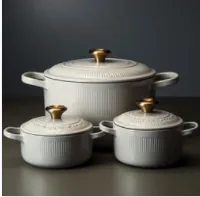
How to properly boil a newly purchased Casserole Pot Cast Iron?
The boiling process directly affects the subsequent service life:
- Cleaning: Use warm water to scrub the surface with industrial anti rust wax, dry it dry, and then dry it over low heat;
- Oil coating: Apply high-temperature resistant oil (such as peanut oil) evenly on the inside and outside, until it is thin enough to appear oil-free;
- Baking: Place it upside down in the oven at 230 ℃ and bake for 1 hour to carbonize the oil film;
- Repeat: After cooling, apply oil and bake 23 times until the surface appears matte black.
It is recommended to fry oily ingredients (such as bacon) for the first time after boiling to enhance the oil film.
-
China PC Light Cast Iron Wok Traditional Heat with Modern Weight
NewsApr.16,2026
-
Professional Guide to China Cleaning Cast Iron Wok Maintenance
NewsApr.09,2026
-
Explore the Benefits of a China Cast Iron Grilling Wok for Your Kitchen
NewsApr.07,2026
-
China Victoria Cast Iron Wok A Comprehensive Guide to Quality Cookware
NewsApr.04,2026
-
Discover the Superior Quality of China Enameled Cast Iron Wok Cookware
NewsMar.31,2026
-
Discover the Benefits of a China Cast Iron Wok with Lid for Authentic Cooking
NewsMar.28,2026