- 150m Southwards, West DingWei Road, Nanlou Village, Changan Town, GaoCheng Area, Shijiazhuang, HeBei, China
- monica@foundryasia.com
Oct . 28, 2025 11:50 Back to list
Casserole Iron Cast Pot - Even Heat, Oven-Safe, Durable
Enameled Workhorse: A Field Note on Modern Cast-Iron Casseroles
If you’ve cooked in restaurant backlines or in a tiny apartment galley (I’ve done both), you know one piece that just refuses to quit: the Casserole Iron Cast. FoundryAsia’s “Introducing Our Exquisite Cast Iron Enamel Collection” leans into that heritage with a pragmatic, no-drama build—and, to be honest, a quietly handsome enamel finish. Origin? 150m Southwards, West DingWei Road, Nanlou Village, Changan Town, GaoCheng Area, Shijiazhuang, HeBei, China. I actually visited Hebei years ago; the foundry culture runs deep.
Why it’s trending again
The cookware aisle has gone through a nonstick phase, a stainless phase, and now—interestingly—a cast-iron renaissance. Consumers want durability, induction-ready bases, and fewer coatings that flake. Enamelled iron delivers: heat retention, non-reactive interior, and easy cleanup. Many customers say they’re buying one good pot instead of three so-so ones. Makes sense.
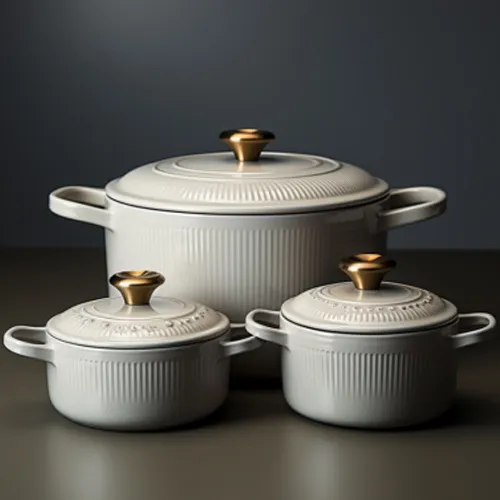
Product snapshot and specs
The set: enameled cast-iron casserole with matching lid. Real-world users report steady simmer control and reliable searing without hot spots (that thick base helps).
| Model | Diameter × Height | Approx. Capacity | Construction | Hob Compatibility |
|---|---|---|---|---|
| Dutch Oven A | Dia26 × 12 cm | ≈5.5 L (real-world may vary) | Gray iron + dual-coat enamel | Gas, Induction, Electric, Ceramic |
| Casserole B | Dia18 × 8 cm | ≈1.8–2.0 L | Gray iron + enamel (light interior) | Gas, Induction, Electric, Ceramic |
| Casserole C | Dia18 × 9.5 cm | ≈2.4 L | Gray iron + enamel (matte exterior) | Gas, Induction, Electric, Ceramic |
How it’s made (short version)
- Materials: ASTM A48 Class 30–40 gray iron base; food-contact vitreous enamel (Pb/Cd compliant).
- Method: Sand casting, shot-blast, CNC surface trim; enamel ground coat + cover coat; fired ≈780–820°C (two-bake process).
- Testing: EN 12983-1 cookware durability/thermal; ISO 4530 food-contact release; LFGB migration; adhesion per ISO 28706; induction flux density check.
- Service life: around 10–20 years with normal use; 300–500 thermal cycles in lab tests without enamel spall (internal data, sample size n≈12).
Where it shines
Braises, risotto, sourdough, campsite stews—this is what a Casserole Iron Cast was born to do. Hotels like the steady holding temp on buffet lines; café kitchens appreciate that enamel doesn’t react with tomato or wine reductions. Home cooks? They love that it goes oven-to-table and looks the part.
Vendor comparison (quick take)
| Vendor | Iron Grade | Enamel Layers | Certs/Tests | MOQ / Lead | Customization |
|---|---|---|---|---|---|
| FoundryAsia (Hebei) | ASTM A48 Cl. 30–40 | 2–3 coats, fired twice | EN 12983, LFGB, ISO 4530 | ≈300 sets / 35–45 days | Pantone color, logo, knob |
| Generic Importer A | Unspecified | 1–2 coats | Basic food-contact | Low MOQ / 60+ days | Limited |
| Boutique EU Brand | High-grade, tightly specced | 3+ coats | Full EU/EN suite | Small batch / 20–30 days | Extensive (premium price) |
Customization and real-world feedback
Options: colorways (matte or gloss), stainless or brass knob, embossed lid, retail-ready packaging. One bistro chain in Shanghai specced a 26 cm piece and reported ≈12% gas savings during lunch prep (lower burner setting held the same braise). Another home-goods retailer said returns were under 0.7% over six months—mostly cosmetic, which, frankly, tracks for enamelware.
Bottom line: a Casserole Iron Cast isn’t hype; it’s heat density plus enamel chemistry. And this set—while not fussy—ticks the standards boxes and then some.
Certifications and standards (typical)
- ASTM A48/A48M gray iron classification (material integrity)
- EN 12983-1 domestic cookware (thermal/structural safety)
- ISO 4530 food-contact release for enamel
- LFGB migration tests; REACH SVHC screening where applicable
Final note
It seems that a well-built Casserole Iron Cast bridges pro kitchens and Sunday stews. This one does, without drama, and that’s the point.
-
China PC Light Cast Iron Wok Traditional Heat with Modern Weight
NewsApr.16,2026
-
Professional Guide to China Cleaning Cast Iron Wok Maintenance
NewsApr.09,2026
-
Explore the Benefits of a China Cast Iron Grilling Wok for Your Kitchen
NewsApr.07,2026
-
China Victoria Cast Iron Wok A Comprehensive Guide to Quality Cookware
NewsApr.04,2026
-
Discover the Superior Quality of China Enameled Cast Iron Wok Cookware
NewsMar.31,2026
-
Discover the Benefits of a China Cast Iron Wok with Lid for Authentic Cooking
NewsMar.28,2026