- 150m Southwards, West DingWei Road, Nanlou Village, Changan Town, GaoCheng Area, Shijiazhuang, HeBei, China
- monica@foundryasia.com
Sep . 10, 2025 08:20 Back to list
Best Light Weight Nonstick Cast Iron Enameled Skillet
Advancements in High-Performance Cookware: The light weight nonstick cast iron enameled skillet
The modern culinary landscape, particularly within B2B sectors such as professional hospitality, institutional catering, and specialized food manufacturing, demands cookware that offers a trifecta of performance: durability, efficiency, and ease of use. Traditional cast iron, while lauded for its heat retention and even cooking, has historically been associated with significant weight and the necessity for meticulous seasoning. However, innovations in metallurgy and coating technology have given rise to the light weight nonstick cast iron enameled skillet, a product category that addresses these challenges directly. This evolution signifies a pivotal shift, offering the robust benefits of cast iron with enhanced user ergonomics and reduced maintenance.
Current industry trends indicate a growing preference for versatile cookware that performs optimally across various heat sources. For instance, the compatibility of a light weight nonstick cast iron enameled skillet with diverse kitchen setups is paramount. Many modern commercial kitchens feature glass-top induction ranges, necessitating cookware engineered to prevent scratching while maintaining efficient heat transfer. The surface finish and base design of these advanced skillets are carefully considered to enable effective using cast iron skillet on glass top stove and seamless cooking with cast iron on electric stove without compromise. The nonstick properties, derived from a durable enamel coating, further streamline operations by simplifying food release and cleanup, crucial factors in high-volume environments.
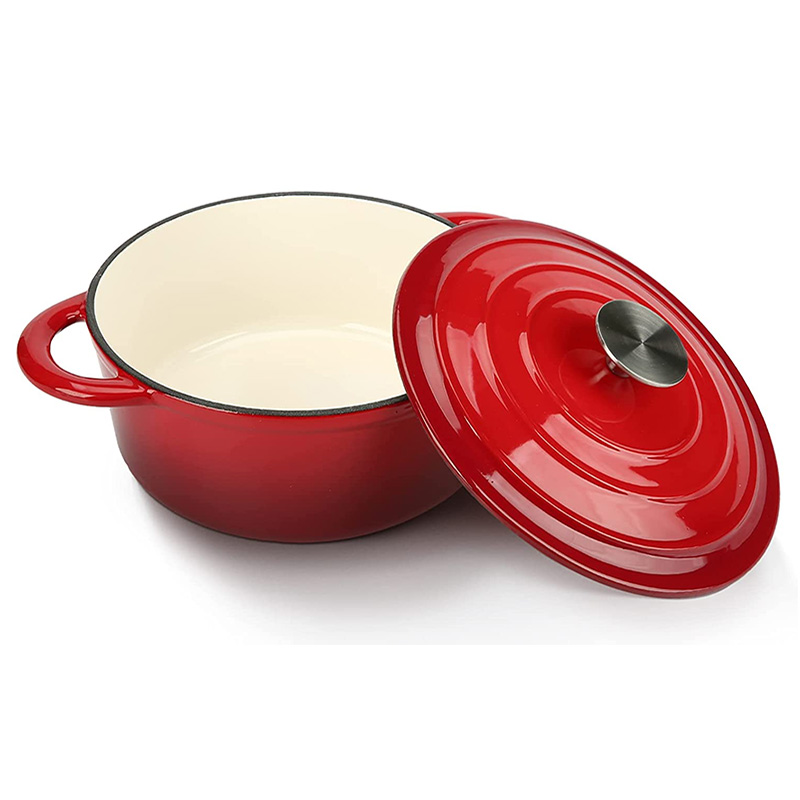
Technical Specifications and Material Science
The engineering behind a light weight nonstick cast iron enameled skillet involves a sophisticated integration of material science and manufacturing precision. The core material remains high-quality gray cast iron, selected for its excellent thermal mass and ability to distribute heat uniformly. However, achieving "light weight" involves optimizing the casting process and potentially using alloys with adjusted carbon and silicon content, or designing thinner walls without compromising structural integrity. This careful balance ensures that the skillet retains its heat performance while being easier for kitchen staff to handle, reducing physical strain in demanding settings.
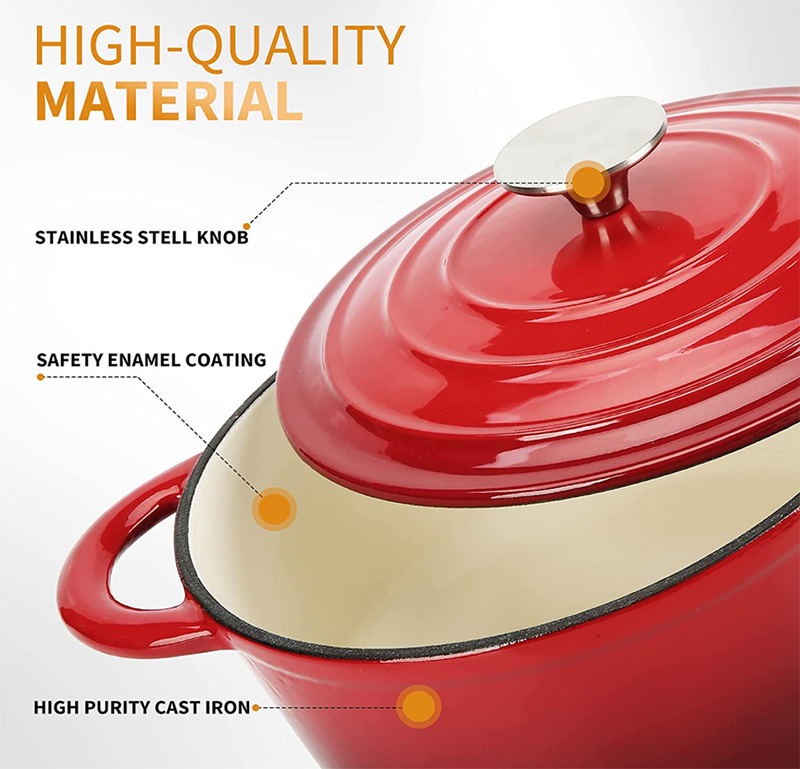
The "nonstick" attribute is conferred by multiple layers of vitreous enamel, a glass-based coating fused to the cast iron at extremely high temperatures. This enamel layer is chemically inert, impermeable, and provides a smooth, low-friction surface that prevents food from adhering. Unlike traditional bare cast iron, an enameled skillet does not require initial seasoning or ongoing re-seasoning, making it immediately ready for use and simplifying maintenance protocols. Furthermore, the enamel protects the underlying cast iron from rust and acidic foods, significantly extending the cookware's service life.
Key parameters for a high-performance light weight nonstick cast iron enameled skillet include:
| Parameter | Specification | Benefits |
|---|---|---|
| Material Core | Grey Cast Iron (FC200 equivalent) | Superior heat retention, even heat distribution. |
| Enamel Coating | Multi-layer Vitreous Enamel (Glass Frit) | Nonstick, acid-resistant, chip-resistant, easy to clean. |
| Weight Reduction | Optimized wall thickness, ergonomic design | Improved handling, reduced fatigue for culinary professionals. |
| Thermal Shock Resistance | ΔT > 250°C | Withstands rapid temperature changes. |
| Temperature Rating | Up to 260°C (500°F) oven safe | Versatility for stovetop, oven, and grill use. |
| Compatibility | Induction, Gas, Electric, Ceramic, Halogen, Oven, Grill | Universal applicability for commercial kitchens, including cast iron skillet for induction cooktop. |
The base of these skillets is often engineered for flatness and smoothness to ensure maximum contact with induction hobs, crucial for efficient heating. This is especially relevant for a cast iron griddle for induction cooktop variant, where large surface area contact is vital for even cooking. The robust construction ensures a prolonged service life, often exceeding 10-15 years with proper care, making them a cost-effective investment for industries like hospitality, where cookware endures daily rigorous use.

Manufacturing Process Flow for Enameled Cast Iron Skillets
The production of a light weight nonstick cast iron enameled skillet involves a multi-stage, precision-controlled manufacturing process to ensure product integrity and performance. Adherence to international testing standards such as ISO 9001 for quality management and ANSI standards for material specifications is critical throughout the entire process.
- Raw Material Sourcing and Preparation: High-grade pig iron, steel scrap, and alloying elements (e.g., ferrosilicon, ferromanganese) are carefully selected. These materials undergo spectrometer analysis to ensure compliance with metallurgical specifications, crucial for achieving the desired "light weight" characteristics through optimized material composition.
- Melting and Alloying: Raw materials are melted in induction furnaces, allowing for precise temperature control and homogenization. Specific alloying elements are introduced to fine-tune the cast iron's properties, enhancing strength while reducing density for a lighter product.
-
Casting (Sand Casting or Die Casting):
- Sand Casting: Molds are created from compacted sand, often incorporating advanced molding techniques to achieve thinner, uniform wall thicknesses. Molten cast iron is poured into these molds. This method is cost-effective for complex shapes.
- Die Casting: For specific designs aiming for higher precision and minimal wall thickness, pressure die casting can be employed. This method typically results in lighter, more consistent parts with superior surface finish, but requires higher tooling investment.
- Fettling and Grinding: Excess metal (flashing, risers, gates) is removed. The castings undergo grinding and shot blasting to smooth rough edges and prepare the surface for enameling, ensuring optimal adhesion.
-
Enamel Application: This is a multi-step process:
- Pre-treatment: The skillet is thoroughly cleaned to remove any residues.
- Ground Coat Application: A base layer of enamel (ground coat) is applied, typically by dipping or spraying, and then fired at high temperatures (e.g., 800-850°C). This layer provides excellent adhesion to the cast iron.
- Cover Coat(s) Application: One or more layers of colored or clear enamel (cover coats) are applied and fired. These layers impart the desired aesthetic and enhance the nonstick and protective properties.
-
Quality Control and Testing: Finished skillets undergo rigorous inspection:
- Visual inspection for enamel defects (chips, bubbles, uneven coating).
- Adhesion testing (e.g., cross-hatch test) to ensure enamel bond strength.
- Thermal shock resistance testing.
- Chemical resistance testing (e.g., against common food acids).
- Weight and dimensional accuracy checks.
- Packaging: Products are carefully packaged to prevent damage during transit to industries such as petrochemical (for specialized applications), metallurgy, and water supply & drainage (for facility kitchens) and general hospitality.
This detailed process ensures that each light weight nonstick cast iron enameled skillet meets stringent quality and performance criteria, providing an optimal balance of energy saving, corrosion resistance, and user-friendliness.
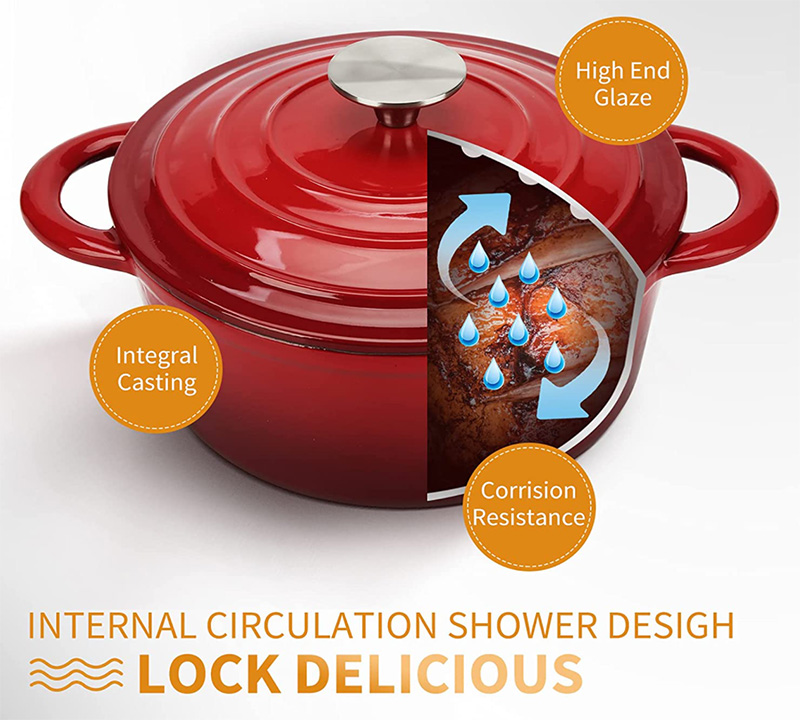
Technical Advantages and Performance Metrics
The technical advantages of a light weight nonstick cast iron enameled skillet are multifaceted, contributing significantly to efficiency and culinary excellence in demanding B2B environments. These advantages are rooted in the synergistic properties of its materials and construction.
- Optimized Thermal Performance: Despite being lighter, the cast iron core retains its superior specific heat capacity and thermal conductivity, enabling rapid and uniform heat distribution across the cooking surface. This minimizes hot spots and ensures consistent results, crucial for professional consistency. The energy-saving aspect comes from its ability to hold heat for extended periods, reducing the need for constant energy input during cooking.
- Exceptional Corrosion Resistance: The vitreous enamel coating acts as an impermeable barrier, protecting the cast iron from oxidation, rust, and chemical degradation from acidic foods like tomatoes, wine, or vinegar. This significantly extends the service life compared to bare cast iron and negates the need for seasoning, which is a common concern with pre seasoned cast iron skillet first use and ongoing maintenance.
- Enhanced Nonstick Properties: The smooth, durable enamel surface provides inherent nonstick capabilities, facilitating easy food release and simplifying cleanup. This is a critical advantage in busy kitchens where time and hygiene are paramount. The nonstick performance is achieved without relying on synthetic coatings that can degrade over time.
- Durability and Longevity: Engineered to withstand rigorous daily use in commercial settings, these skillets are highly resistant to chipping, scratching, and staining. Their robust construction and protective enamel contribute to a long operational lifespan, reducing replacement costs over time.
- Versatility Across Heat Sources: From high-temperature searing on gas ranges to slow braising in industrial ovens, and efficient heating on induction cooktops, the design ensures broad compatibility. The flat, smooth base is optimized for induction, ensuring maximum energy transfer and even heating.
- Hygienic and Food Safe: The inert enamel surface does not leach chemicals into food and is naturally antimicrobial, making it a hygienic choice for food preparation in regulated environments. Compliance with FDA standards for food contact materials is a key consideration.

Application Scenarios and Target Industries
The versatility and high-performance attributes of a light weight nonstick cast iron enameled skillet make it an indispensable tool across a broad spectrum of B2B applications. Its design caters specifically to the rigorous demands of professional kitchens and industrial food preparation environments.
- Hospitality and Restaurants: From fine dining establishments to bustling casual eateries, these skillets excel in diverse cooking tasks. Their superior heat retention is ideal for searing meats, achieving perfect crusts on fish, and sautéing vegetables uniformly. The nonstick surface ensures delicate items like eggs or crêpes release effortlessly. The lighter weight improves ergonomics for chefs handling multiple pans during peak service, reducing repetitive strain injuries. The enduring popularity of chefs like Matty Matheson in promoting robust, functional cookware underscores the demand for quality tools in this sector, making the matty matheson cookware cast iron skillet a benchmark for heavy-duty performance.
- Catering and Event Management: For large-scale events, maintaining food quality and temperature is paramount. These skillets can be used for preparing large batches of food, transferring directly to warming stations, and even for presentation due to their attractive finish. Their robustness stands up to transport and varied cooking environments, including outdoor setups.
- Institutional Food Service: Hospitals, schools, corporate cafeterias, and military kitchens require durable, easy-to-clean cookware that can withstand constant use and rigorous cleaning protocols. The enamel's resistance to harsh detergents and its non-reactive properties make it ideal for preparing a wide range of meals, ensuring food safety and operational efficiency.
- Specialized Food Production: Artisan bakeries, pizza shops, and even some light industrial food processing facilities can benefit. For example, the thermal mass of these skillets is excellent for achieving a crispy crust, making them perfect for applications such as an upside down pizza in cast iron skillet, where even heat from all sides is critical.
- Outdoor and Live Cooking Demonstrations: Their ability to perform on various heat sources, including open flames, makes them a prime candidate for outdoor grills and live cooking stations. The durability and ease of cleaning are significant advantages in these less controlled environments, establishing them as the best cast iron skillet for outdoor grill applications due to their heat retention and ruggedness.
These application scenarios highlight the product's adaptability and its critical role in enhancing productivity, ensuring food quality, and optimizing operational costs across diverse professional culinary settings.
Vendor Comparison and Customized Solutions
When B2B clients evaluate providers for a light weight nonstick cast iron enameled skillet, a detailed vendor comparison is essential. Key differentiators extend beyond mere price to encompass material quality, manufacturing precision, coating durability, ergonomic design, and post-sales support. Reputable manufacturers distinguish themselves through rigorous quality control and innovation in achieving the "light weight" aspect without sacrificing performance.
| Feature | Premium Vendor Offering | Standard Offering |
|---|---|---|
| Core Material Quality | Virgin Pig Iron, optimized alloy for strength/weight | Recycled/Standard Cast Iron |
| Enamel Layers | 3-4 chip-resistant layers (incl. ground & cover) | 1-2 standard layers |
| Weight (26cm skillet) | ~2.5 kg - 3.0 kg (optimized) | ~3.5 kg - 4.5 kg (traditional) |
| Handle Design | Ergonomic, heat-dissipating, integrated assist handle | Basic, sometimes unintegrated assist handle |
| Thermal Shock Resistance | Excellent (ΔT > 250°C) | Good (ΔT ~ 180°C) |
| Certifications | ISO 9001, FDA food-grade, LFGB | Basic or limited certifications |
| Customization Options | Logo embossing, specific colors, handle materials, dimensions | Limited to color choices |
For B2B clients, customized solutions are often a necessity. A robust manufacturer of light weight nonstick cast iron enameled skillet products offers capabilities such as:
- Branding and Logos: Custom molding to incorporate corporate logos or specific branding elements directly into the cast iron or enamel.
- Specific Dimensions and Shapes: Designing and manufacturing skillets to unique dimensions or specialized geometries required for bespoke culinary applications or equipment integration.
- Color Matching: Producing enamel in custom color palettes to match brand identity or kitchen aesthetics.
- Handle Materials and Design: Offering alternatives for handle materials (e.g., stainless steel, specific wood types, phenolic resin) or ergonomic handle designs tailored for specific professional use cases.
- Performance Enhancements: Incorporating specialized bases for enhanced induction performance or specific coatings for extreme temperature resistance.
Application Case Studies and Customer Experience
Real-world application demonstrates the tangible benefits of integrating a light weight nonstick cast iron enameled skillet into professional operations.
Case Study 1: High-Volume Restaurant Chain
A national restaurant chain operating over 200 locations faced challenges with their existing cookware. Traditional cast iron was too heavy for rapid service, leading to staff fatigue and increased risk of injury, while conventional nonstick pans had a short lifespan in a high-heat, high-turnover environment. By transitioning to custom-designed light weight nonstick cast iron enameled skillet units, the chain reported a 30% reduction in staff complaints related to cookware weight and a 40% increase in pan longevity compared to their previous nonstick options. The consistent heat performance also led to improved food quality, particularly for seared items and pan-fried dishes, resulting in positive customer feedback regarding consistency and taste.
Case Study 2: Industrial Catering Service
An industrial catering service specializing in large corporate events and remote site operations required durable, easy-to-clean cookware that could withstand transport and varied cooking conditions. Their primary concerns were corrosion from acidic foods prepared in bulk and the labor intensity of cleaning traditional cookware. Adopting a suite of enameled cast iron skillets drastically improved their operational efficiency. The inherent corrosion resistance of the enamel meant less time spent on specialized cleaning, while the nonstick properties minimized food residue, reducing water and detergent consumption. The robust construction also meant fewer replacements, leading to a 25% reduction in annual cookware expenditure.
Customer Feedback Excerpt:
"Our kitchen staff were initially skeptical about 'light weight' cast iron, but these skillets have been a game-changer. They still give us that beautiful sear and even heat we need, but they're so much easier to maneuver, especially during peak service. The enamel finish holds up incredibly well to constant use and cleaning. A truly professional tool."
– Executive Chef, Five-Star Hotel Group
Authoritativeness and Trustworthiness: Our Commitment
Our commitment to providing high-quality light weight nonstick cast iron enameled skillet products is underscored by our adherence to international standards, transparent processes, and unwavering customer support. We understand that in the B2B sector, trust is built on verifiable expertise and reliable service.
Certifications and Compliance:
- ISO 9001 Certified: Our manufacturing facilities operate under stringent ISO 9001 quality management systems, ensuring consistent product quality from raw material to finished good.
- FDA Food-Grade Compliance: All enamel coatings are tested and certified to meet FDA (U.S. Food and Drug Administration) standards for food contact materials, guaranteeing safety and non-toxicity.
- LFGB (German Food and Feed Code) Tested: Products conform to European standards for food contact materials, further validating their safety and quality for international markets.
Lead Time and Fulfillment:
Standard lead times for bulk orders typically range from 30 to 60 days, depending on customization requirements and order volume. We maintain robust supply chain logistics to ensure timely delivery and offer expedited options for urgent requirements. Detailed production schedules and tracking are provided for every order.
Warranty Commitments:
We stand behind the quality of our products with a comprehensive 5-year limited warranty against manufacturing defects. This warranty covers issues arising from material or workmanship flaws under normal use conditions in professional settings, reflecting our confidence in the durability and longevity of our enameled cast iron skillets.
Customer Support and After-Sales Service:
Our dedicated B2B customer support team provides expert assistance from initial inquiry through post-purchase support. Services include technical consultation, order management, and responsive handling of any product-related queries or concerns. We offer comprehensive guides on product care and maintenance to maximize the lifespan of your investment.
Frequently Asked Questions (FAQ):
- Q: Can your light weight nonstick cast iron enameled skillet be used on induction cooktops?
- A: Yes, all our enameled cast iron skillets are fully compatible with induction, gas, electric, ceramic, and halogen cooktops, as well as oven and grill safe up to 260°C (500°F).
- Q: Is seasoning required for enameled cast iron?
- A: No, the vitreous enamel coating provides a natural nonstick surface and protects the cast iron, eliminating the need for seasoning. This also means it's ready for immediate use and is resistant to acidic foods.
- Q: How do I clean my enameled cast iron skillet?
- A: Simply wash with warm soapy water and a non-abrasive sponge. For stubborn food residue, soak briefly with warm water before cleaning. Avoid abrasive cleaners or metal scouring pads to preserve the enamel surface. Dishwasher safe, though handwashing is recommended for longevity.
- Q: What makes your skillets "light weight" compared to traditional cast iron?
- A: We achieve reduced weight through optimized casting techniques that allow for thinner yet robust wall sections, combined with precise material composition adjustments. This significantly reduces the overall mass without compromising heat retention or durability.
- Q: Can I get customized colors or branding?
- A: Absolutely. We offer extensive customization options for B2B clients, including custom enamel colors, logo embossing, and specific design modifications. Please contact our sales team to discuss your specific requirements.
Conclusion
The evolution of cast iron cookware into the light weight nonstick cast iron enameled skillet represents a significant leap forward for B2B culinary operations. By combining the legendary heat retention and durability of cast iron with the convenience of a nonstick, easy-to-clean, and lighter-weight design, these skillets meet the stringent demands of modern professional kitchens. They offer enhanced efficiency, improved ergonomics for kitchen staff, superior food quality consistency, and a longer operational lifespan, all while maintaining compatibility with diverse cooking technologies. For businesses seeking to optimize their culinary processes and invest in high-performance, sustainable cookware solutions, the enameled cast iron skillet stands as a premier choice.
References:
- ISO 9001:2015 - Quality management systems — Requirements. International Organization for Standardization.
- U.S. Food and Drug Administration (FDA) Regulations for Food Contact Materials. Code of Federal Regulations, Title 21.
- German Food and Feed Code (LFGB). Bundesministerium für Ernährung und Landwirtschaft.
- Materials Science and Engineering: An Introduction. William D. Callister Jr. & David G. Rethwisch. John Wiley & Sons.
- Principles of Food Science. Janet D. Ward. Goodheart-Willcox Co. Inc.
-
China PC Light Cast Iron Wok Traditional Heat with Modern Weight
NewsApr.16,2026
-
Professional Guide to China Cleaning Cast Iron Wok Maintenance
NewsApr.09,2026
-
Explore the Benefits of a China Cast Iron Grilling Wok for Your Kitchen
NewsApr.07,2026
-
China Victoria Cast Iron Wok A Comprehensive Guide to Quality Cookware
NewsApr.04,2026
-
Discover the Superior Quality of China Enameled Cast Iron Wok Cookware
NewsMar.31,2026
-
Discover the Benefits of a China Cast Iron Wok with Lid for Authentic Cooking
NewsMar.28,2026