- 150m Southwards, West DingWei Road, Nanlou Village, Changan Town, GaoCheng Area, Shijiazhuang, HeBei, China
- monica@foundryasia.com
Sep . 22, 2025 11:50 Back to list
Best Cast Iron Skillet for Outdoor Grill: Versatile & Durable
Advancing Culinary Performance: Selecting the Optimal Cast Iron Skillet for Outdoor Grilling
In the domain of professional outdoor cooking and culinary innovation, the choice of cookware significantly impacts gastronomic outcomes. This analysis focuses on identifying the best cast iron skillet for outdoor grill applications, delving into the technical specifications, manufacturing precision, and functional advantages that distinguish superior products in the B2B market. We explore how advanced metallurgy and design principles contribute to unparalleled heat retention, durability, and versatility, crucial for demanding outdoor culinary environments.
The demand for robust, high-performance cookware is escalating across commercial kitchens, catering services, and outdoor hospitality sectors. Cast iron, with its inherent thermal properties, remains a cornerstone material. Our exploration encompasses a detailed examination of contemporary industry trends, the intricate manufacturing processes involved, and a comparative analysis of vendor offerings, ensuring a comprehensive understanding for informed procurement decisions.
Industry Trends in High-Performance Cast Iron Cookware
The market for cast iron cookware is experiencing significant evolution, driven by consumer demand for durability, multi-functionality, and health-conscious cooking. Key trends impacting the selection of the best cast iron skillet for outdoor grill applications include:
- Enhanced Durability and Longevity: Manufacturers are focusing on advanced casting techniques and surface treatments to extend product lifespan and reduce the total cost of ownership for commercial users.
- Thermal Efficiency Optimisation: Innovations in base thickness and material composition are leading to more uniform heat distribution, reducing hot spots, and enhancing energy efficiency, especially when cooking with cast iron on electric stove or using a cast iron skillet for induction cooktop.
- Non-stick Advancements: While traditional seasoning remains vital (understanding pre seasoned cast iron skillet first use), there's a growing interest in light weight nonstick cast iron enameled skillet options, offering ease of maintenance and resistance to acidic foods without compromising thermal performance.
- Versatility in Application: Products are designed to be adaptable across various heat sources, from open flames and outdoor grills to induction cooktops and glass top stoves, expanding their utility for professional chefs. The concept of a cast iron griddle for induction cooktop further exemplifies this trend.
- Ergonomics and Design: Beyond performance, ergonomic handles and balanced designs are gaining importance, improving user experience and safety in high-volume kitchen environments. Cookware lines from renowned chefs like Matty Matheson cookware cast iron skillet illustrate this blend of function and form.
These trends collectively underscore a move towards more engineered, versatile, and user-centric cast iron solutions for the professional market.
Manufacturing Process: Precision Engineering for Superior Cast Iron Skillets
The creation of a high-quality best cast iron skillet for outdoor grill involves a meticulously controlled manufacturing process, ensuring metallurgical integrity and functional excellence. This process typically follows these key stages:
1. Material Selection and Melting
High-grade pig iron, combined with recycled cast iron scrap and alloying elements (such as silicon and manganese for improved fluidity and strength), is melted in an induction furnace at temperatures exceeding 1400°C. Strict control over carbon content (typically 2.5-4.0%) and silicon content (1.0-3.0%) is crucial for achieving desired hardness and machinability.
2. Sand Molding (Casting)
A sand mold, comprising a cope (top half) and a drag (bottom half), is created using precision patterns. Cores may be used for internal features or handles. The mold's permeability, strength, and refractoriness are critical for defect-free casting. Green sand or resin-bonded sand systems are commonly employed.

3. Pouring and Solidification
The molten iron is poured into the prepared molds. During solidification, careful control of cooling rates prevents internal stresses and ensures a uniform microstructure, critical for the long-term integrity of a best cast iron skillet for outdoor grill. This phase directly influences the material's ability to withstand thermal shock and mechanical stress during intense outdoor use.
4. Fettling and Cleaning
Once cooled, the cast iron pieces are removed from the sand molds (shakeout). Risers, gates, and runners are then removed, and the castings undergo shot blasting to clean the surface, remove scale, and prepare them for subsequent processing.
5. Machining and Finishing
Critical surfaces, such as the cooking surface and base, may undergo CNC machining to achieve precise flatness and smoothness, vital for optimal heat transfer on cooktops, including using cast iron skillet on glass top stove or induction. This stage also ensures consistent wall thickness for even heat distribution.
6. Surface Treatment (Seasoning or Enameling)
- Pre-seasoning: For bare cast iron, a vegetable oil (e.g., flaxseed or soy) is applied and baked at high temperatures (typically 200-260°C) to polymerize the oil, creating a natural, non-stick, and rust-resistant layer. Understanding pre seasoned cast iron skillet first use is crucial for end-users.
- Enameling: For enameled products, a glass-based coating is applied in multiple layers and fired at extremely high temperatures (700-800°C). This creates a durable, non-reactive, and aesthetically pleasing surface, offering benefits similar to a light weight nonstick cast iron enameled skillet.
7. Quality Control and Testing
Every stage incorporates rigorous quality checks. Final products undergo a battery of tests including:
- Material Composition Analysis: Spectrographic analysis confirms alloy specifications.
- Dimensional Accuracy: CMM (Coordinate Measuring Machine) or gauges ensure adherence to design tolerances.
- Surface Integrity: Visual inspection for defects, and adhesion tests for enameled coatings (e.g., cross-cut tests).
- Thermal Performance: Heat distribution and retention tests.
- Durability Testing: Impact and thermal shock resistance, especially crucial for cookware used on outdoor grills.
Compliance with international standards like ISO 9001 (Quality Management) and relevant ANSI/ASTM standards for material specifications ensures consistent product quality and safety for target industries such as professional catering, hospitality, and outdoor event management. The service life of well-maintained cast iron cookware can exceed 50 years, demonstrating exceptional value in these demanding environments.
Technical Specifications and Performance Parameters
Understanding the core technical specifications is paramount when evaluating the best cast iron skillet for outdoor grill applications. Key parameters influence performance, durability, and suitability for various cooking styles.
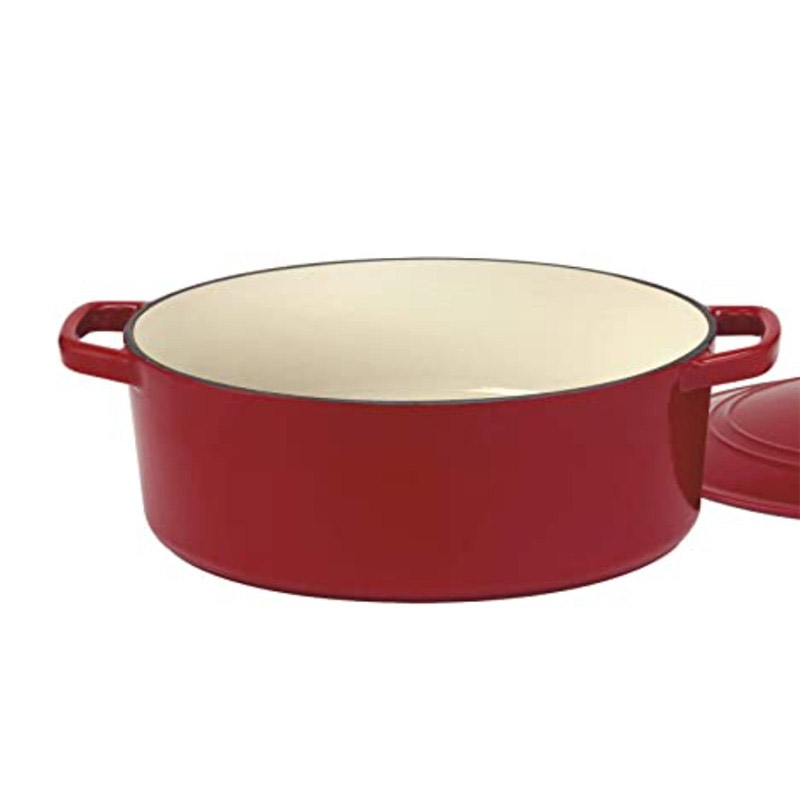
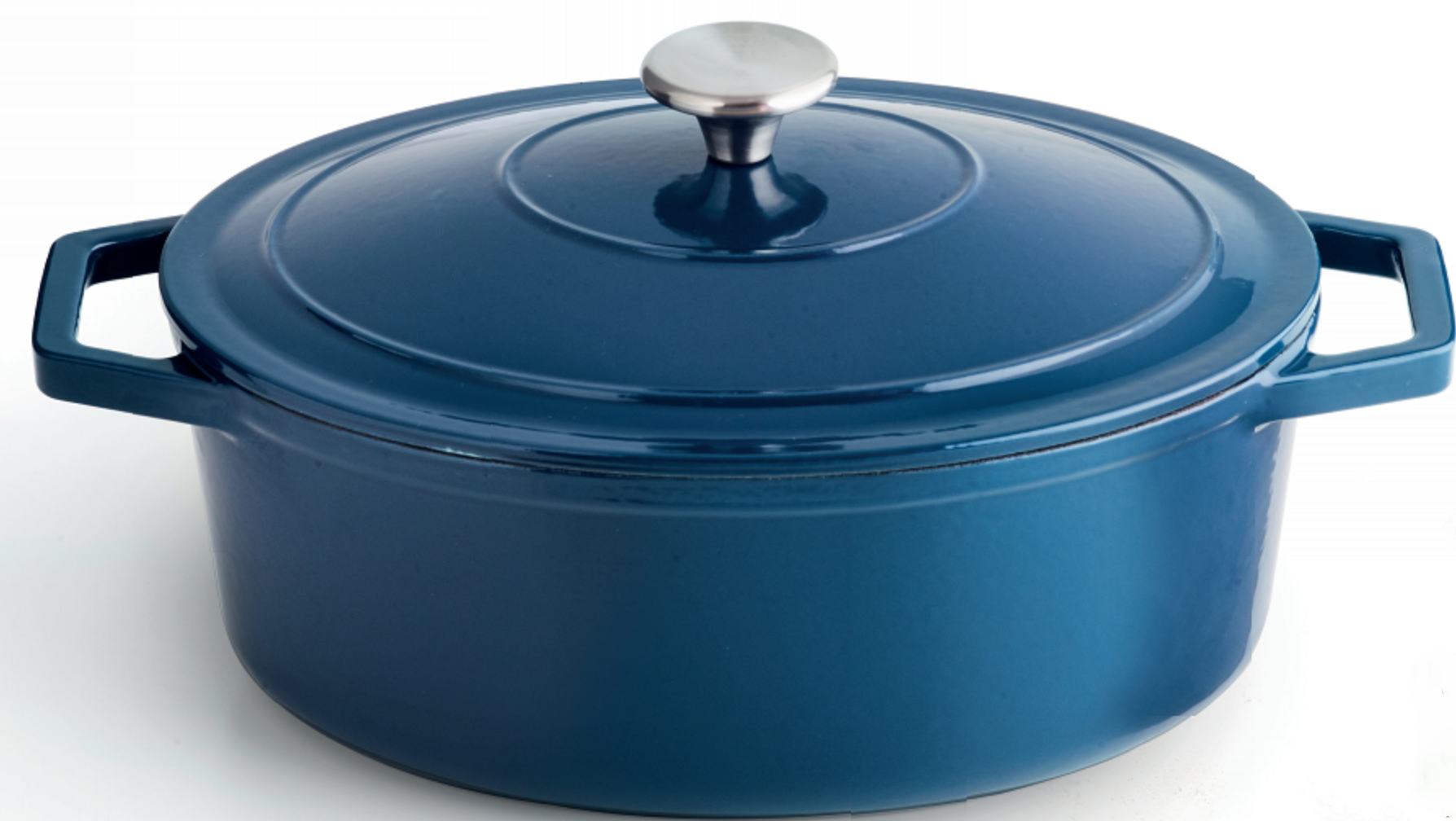
Key Product Specification: Enameled Cast Iron Oval Dutch Oven (Example)
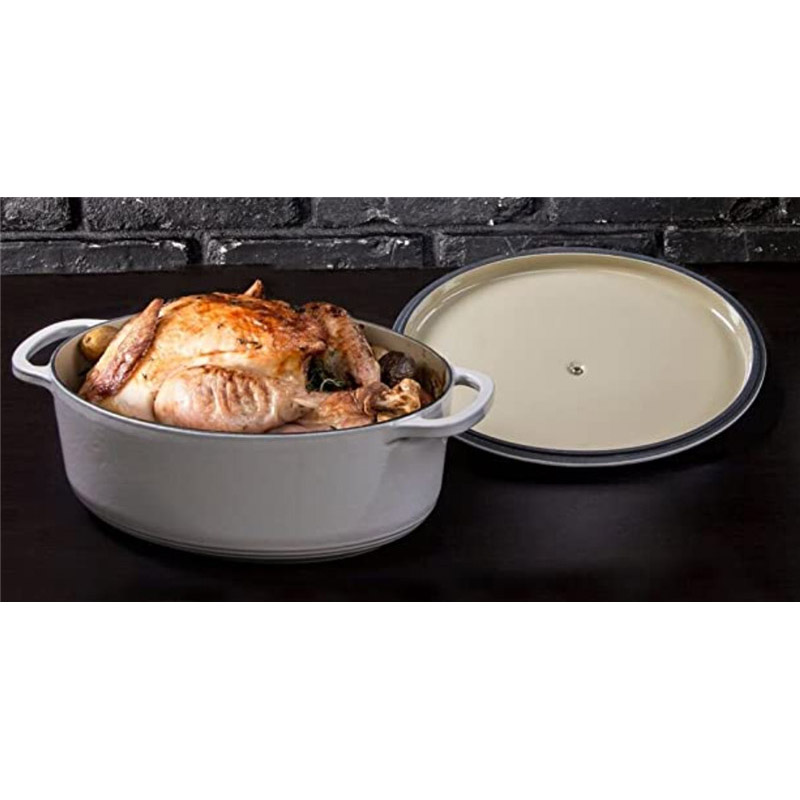
While the primary keyword focuses on skillets, understanding the robust specifications of related cast iron products, such as an Enameled Cast Iron Oval Dutch Oven, provides context for the quality and engineering applied to similar cookware, including skillets designed for intense heat sources like outdoor grills.
| Parameter | Specification | Technical Advantage |
|---|---|---|
| Material | High-grade Grey Cast Iron (GG20/GG25 equivalent) | Exceptional thermal mass for consistent heat; high resistance to deformation under extreme temperatures. |
| Coating | Two-layer Enameled Interior (cream/black), Glossy Enameled Exterior | Non-reactive surface, corrosion resistance, easy cleaning, prevents seasoning degradation from acidic foods. |
| Heat Retention Index (Joules/kg·K) | ~450 J/kg·K (Cast Iron) | Superior thermal inertia ensures stable cooking temperatures, ideal for searing and slow cooking outdoors. |
| Thermal Conductivity (W/m·K) | ~50-60 W/m·K | Even heat distribution across the cooking surface, reducing hot spots, vital for consistent grilling results. |
| Operating Temperature Range | Up to 260°C (500°F) for enameled; up to 400°C+ (750°F+) for bare cast iron | Versatility for high-heat searing on grills and ovens, as well as lower-temperature simmering. |
| Wall Thickness (Base/Sides) | Typically 4-6 mm (varies by product) | Optimal mass for heat retention without being excessively heavy, balancing performance and handling. |
| Impact Resistance | ASTM A48 Class 30 equivalent | Robust construction withstands typical commercial kitchen and outdoor handling rigors. |
Application Scenarios and Technical Advantages
The versatility and robust performance of the best cast iron skillet for outdoor grill extend across numerous professional applications, offering significant technical and operational advantages.
Outdoor Grilling and Live Cooking Stations
- Superior Searing: Cast iron's high thermal mass allows it to retain intense heat, ideal for achieving perfect crusts on steaks, fish, and vegetables directly on grill grates. This is especially true for large surface area units like a cast iron griddle for induction cooktop that also doubles as a grill surface.
- Even Cooking: The conductive properties ensure uniform heat distribution, preventing undercooked centers and overcooked edges, even with fluctuating grill temperatures.
- Smoke and Flavor Infusion: Direct contact with grill smoke allows for deeper flavor penetration into foods cooked in the skillet.
Professional Kitchens and Catering
- Induction Compatibility: A cast iron skillet for induction cooktop provides rapid heating and precise temperature control, making it a staple in modern kitchens.
- Oven-to-Table Service: The ability to transition seamlessly from stovetop/grill to oven and then directly to service minimizes dishware and maintains food temperature, perfect for dishes like upside down pizza in cast iron skillet.
- Energy Efficiency: Due to superior heat retention, less energy is required to maintain cooking temperatures, contributing to energy saving in high-volume operations.
Specific Advantages:
- Corrosion Resistance: Enameled options offer superior resistance to acidic foods and cleaning agents, extending service life in demanding environments.
- Thermal Shock Durability: Engineered cast iron can withstand rapid temperature changes, a critical feature for transfer between refrigeration and high-heat cooking surfaces.
- Versatile Heat Sources: Compatible with gas, electric, induction, glass top stoves, open flame, and charcoal grills, making them ideal for diverse culinary setups.
Vendor Comparison and Customization Solutions
The market for cast iron cookware features several reputable manufacturers, each with distinct offerings. A critical evaluation is essential for B2B buyers to select the best cast iron skillet for outdoor grill applications that align with their specific operational needs and quality standards.
Key Differentiators Among Vendors
| Feature | Vendor A (Premium) | Vendor B (Mid-Market) | Vendor C (Specialty Foundry) |
|---|---|---|---|
| Material Grade | Proprietary high-density cast iron, ultra-low impurity | Standard Grey Cast Iron (e.g., GG20) | Custom alloy blends for specific thermal properties |
| Surface Finish | Multi-layer vitreous enamel (chip-resistant), perfected pre-seasoning | Standard enamel or factory pre-seasoned (single layer) | Fine-ground, specialized surface textures for unique cooking results |
| Heat Source Compatibility | All sources including induction, glass-top, open flame | Most common sources (gas, electric, some induction) | Engineered for specific high-stress environments (e.g., campfires, industrial ranges) |
| Weight Profile | Optimized for balance of heat retention and maneuverability | Standard commercial weight | Options for light weight nonstick cast iron skillet designs, or heavy-duty for extreme durability |
| Certifications | ISO 9001, FDA (food contact safe), stringent internal QC | Basic safety certifications, industry standard | ISO/ASTM metallurgical standards, custom performance testing |
| Customization Options | Limited branding, standard sizes | Size and color variations, minimal mold changes | Full OEM/ODM: bespoke dimensions, custom handle designs, specialized coatings, unique branding. |
Customized Solutions
For high-volume buyers or those with unique culinary requirements, manufacturers offer customized solutions. These can include:
- Bespoke Dimensions: Tailoring skillet diameter, depth, and wall thickness for specialized ovens or grill setups.
- Ergonomic Handle Design: Custom handle shapes, materials, or attachment methods to improve grip and reduce strain for professional users.
- Specialized Coatings: Beyond standard enamels, custom formulations can offer enhanced non-stick properties (e.g., light weight nonstick cast iron skillet), higher heat resistance, or unique aesthetic finishes.
- Integrated Branding: Permanent laser etching or mold casting of corporate logos for private label products.
- Material Composition Adjustments: Fine-tuning the iron alloy for specific thermal profiles or increased corrosion resistance in harsh environments.
Partnerships with manufacturers offering extensive OEM/ODM capabilities are crucial for operations requiring non-standard, high-performance cast iron cookware.
Application Case Studies and Customer Feedback
Real-world applications underscore the performance and reliability of selecting the best cast iron skillet for outdoor grill. These case studies highlight the tangible benefits for commercial entities.
Case Study 1: High-Volume Outdoor Catering Service
A leading outdoor catering firm, specializing in large corporate events, adopted a fleet of heavy-duty, pre-seasoned cast iron skillets for their mobile grilling stations. Prior to this, they faced issues with uneven cooking and rapid wear of lighter stainless steel pans. The transition to cast iron resulted in:
- Improved Food Quality: Consistently superior searing on steaks and vegetables, leading to overwhelmingly positive client feedback.
- Operational Efficiency: Enhanced heat retention reduced cooking times and required fewer heat adjustments, optimizing staff deployment.
- Reduced Replacement Costs: A 75% reduction in cookware replacement over two years, directly impacting the bottom line.
"Our cast iron skillets are workhorses. They perform flawlessly on open flames, delivering perfect results every time. It's truly the best cast iron skillet for outdoor grill operations we've found." – Executive Chef, Global Events Group.
Case Study 2: Boutique Hotel with Rooftop Grill
A luxury boutique hotel installed a rooftop restaurant featuring live grilling. They opted for a specific vendor providing enameled cast iron skillets and a cast iron griddle for induction cooktop, prioritizing aesthetics, durability, and ease of cleaning.
- Premium Presentation: The elegant enameled finish allowed for direct oven-to-table service, enhancing guest experience.
- Versatility: The ability to seamlessly switch between outdoor grills and indoor induction cooktops for prep work provided unparalleled flexibility.
- Reduced Labor: The easy-clean, non-reactive enameled surface significantly cut down on cleaning time compared to traditional cast iron maintenance, improving kitchen workflow efficiency.
"The enameled cast iron line has elevated our culinary program. The durability and aesthetic appeal are unmatched, and maintenance is a breeze. Our chefs love them for everything from cooking with cast iron on electric stove to high-heat grilling." – Food & Beverage Director, The Skyline Residences.
Frequently Asked Questions (FAQ)
Q: What makes a cast iron skillet ideal for outdoor grilling?
A: The high thermal mass of cast iron allows it to absorb and retain intense heat from outdoor grills, providing a stable, even cooking surface. This is crucial for achieving a superior sear and uniform cooking results on a best cast iron skillet for outdoor grill, even over variable flame. Its durability also withstands direct flame exposure and rough handling.
Q: Can I use an enameled cast iron skillet directly on high heat, like a charcoal grill?
A: While enameled cast iron is highly durable, extreme direct high heat (like direct contact with burning charcoal) can potentially cause thermal shock or damage to the enamel over prolonged periods. It's generally recommended to use enameled cast iron on grill grates or with indirect heat for best longevity, reserving bare pre-seasoned cast iron for direct, intense flame cooking.
Q: How do I properly season a new cast iron skillet, or re-season an old one?
A: To season, clean the skillet thoroughly, then apply a very thin layer of high smoke point oil (e.g., flaxseed, grapeseed, or vegetable oil) over the entire surface. Wipe off excess. Bake upside down in an oven at 200-260°C (400-500°F) for one hour. Let cool. Repeat this process 3-5 times for a robust initial seasoning. Regular use and oiling will further enhance its non-stick properties.
Q: What are the lead times for custom orders?
A: Lead times for customized cast iron skillets and related products typically range from 8 to 16 weeks, depending on the complexity of the design, order volume, and current production schedules. Initial mold development can add 4-6 weeks to this timeline. We recommend consulting directly with our sales team for precise lead time estimates based on your specific requirements.
Logistics and After-Sales Support
Lead Time and Fulfillment
For standard bulk orders of the best cast iron skillet for outdoor grill models, typical lead times range from 4-6 weeks, depending on stock availability and production cycles. Expedited options may be available upon request. Our logistics team works diligently to ensure timely delivery, managing freight and customs documentation for international shipments.
Warranty Commitments
All our professional-grade cast iron cookware comes with a comprehensive warranty against manufacturing defects, typically ranging from 5 to 10 years for material and workmanship. Enameled products usually carry specific guarantees against chipping and cracking under normal use. Full warranty terms and conditions are provided with each purchase order. Our commitment to quality is upheld by our ISO 9001 certified manufacturing processes.
Customer Support and Technical Assistance
Our dedicated B2B support team provides expert assistance for product selection, technical specifications, and post-purchase inquiries. We offer:
- Technical Consultation: Guidance on product compatibility with specific kitchen setups or outdoor grilling equipment.
- Maintenance Guidelines: Detailed instructions for care, seasoning, and optimal performance.
- Troubleshooting: Assistance with any operational challenges.
- Parts & Accessories: Availability of replacement parts (e.g., lids, handles for certain models) and complementary accessories.
Our goal is to ensure long-term satisfaction and maximize the return on investment for our clients.
Conclusion
The selection of the best cast iron skillet for outdoor grill operations is a strategic decision for any professional culinary enterprise. Through meticulous manufacturing, advanced material science, and a focus on practical application, modern cast iron cookware offers unmatched durability, thermal performance, and versatility. By understanding the intricate process flows, technical parameters, and customization options, B2B decision-makers can procure solutions that not only meet but exceed the rigorous demands of professional cooking, both indoors and out.
References
- ASM International. (2009). ASM Handbook, Volume 1A: Cast Iron Science and Technology. ASM International.
- ISO 9001:2015. Quality management systems — Requirements. International Organization for Standardization.
- Kulikov, V. I. (2018). Fundamentals of Foundry Practice. Taylor & Francis Group.
- ASTM International. (Various). Standards for Cast Iron, Cookware, and Coatings. ASTM International.
- Food and Drug Administration (FDA). Guidance for Industry: Safe Practices for Food Processing. U.S. Department of Health and Human Services.
-
China PC Light Cast Iron Wok Traditional Heat with Modern Weight
NewsApr.16,2026
-
Professional Guide to China Cleaning Cast Iron Wok Maintenance
NewsApr.09,2026
-
Explore the Benefits of a China Cast Iron Grilling Wok for Your Kitchen
NewsApr.07,2026
-
China Victoria Cast Iron Wok A Comprehensive Guide to Quality Cookware
NewsApr.04,2026
-
Discover the Superior Quality of China Enameled Cast Iron Wok Cookware
NewsMar.31,2026
-
Discover the Benefits of a China Cast Iron Wok with Lid for Authentic Cooking
NewsMar.28,2026