- 150m Southwards, West DingWei Road, Nanlou Village, Changan Town, GaoCheng Area, Shijiazhuang, HeBei, China
- monica@foundryasia.com
Oct . 10, 2025 11:35 Back to list
Pre Seasoned Cast Iron Skillet First Use: Nonstick, Safe?
If you care about steakhouse sear without the steakhouse bill, the first thing to master is the pre seasoned cast iron skillet first use. I’ve tested a small pile of grill pans this year—hotel brunches, campsite fajitas, Tuesday-night salmon when the kitchen fan sounds like a helicopter—and the best experiences all started with smart “first-use” prep.
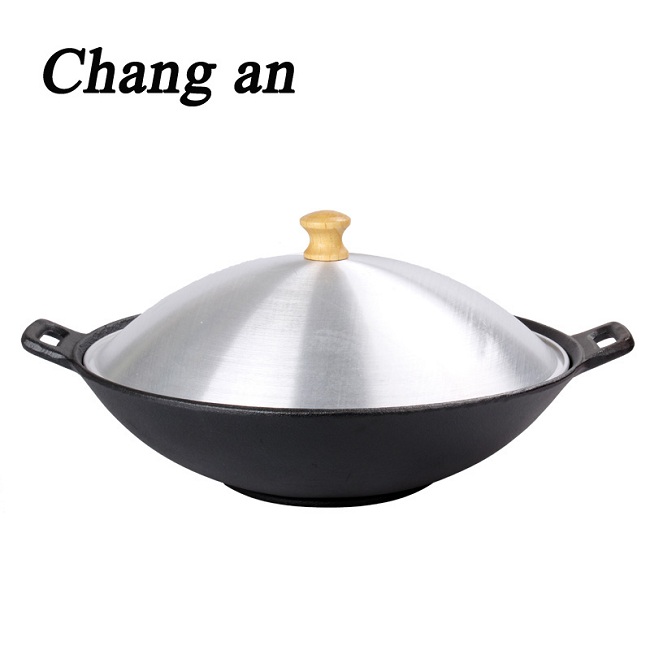
What “pre-seasoned” really means (and the trend behind it)
Factories now polymerize a thin film of vegetable oil at ≈190–210°C, so pans arrive ready-ish. The trend is obvious: fewer returns, faster onboarding for first-time buyers, and less intimidation. To be honest, the factory layer is good, but not magic. A quick at-home boost still pays off.
Fast first-use routine that actually works
- Rinse and dry thoroughly (no soaking). Warm it on low for 2–3 minutes to chase off moisture.
- Wipe a whisper-thin film of high-smoke-point oil (grapeseed or refined canola). Really thin—no slicks.
- Heat to medium until you see a faint sheen and a wisp of smoke; keep it there 10–15 minutes. Let cool.
- For the first cook, choose fatty food (bacon, marbled steak). Avoid acidic sauces for 3–4 cooks.
- Clean with hot water and a brush; dry and wipe a drop of oil. No detergent at this early stage, I guess.
That’s the difference between “sticks on day one” and “crispy-skin win.” Many customers say the factory coat is fine; surprisingly, a single at-home cycle tightens it up noticeably. And yes, this applies whether you call it a grill pan or a skillet—same physics.
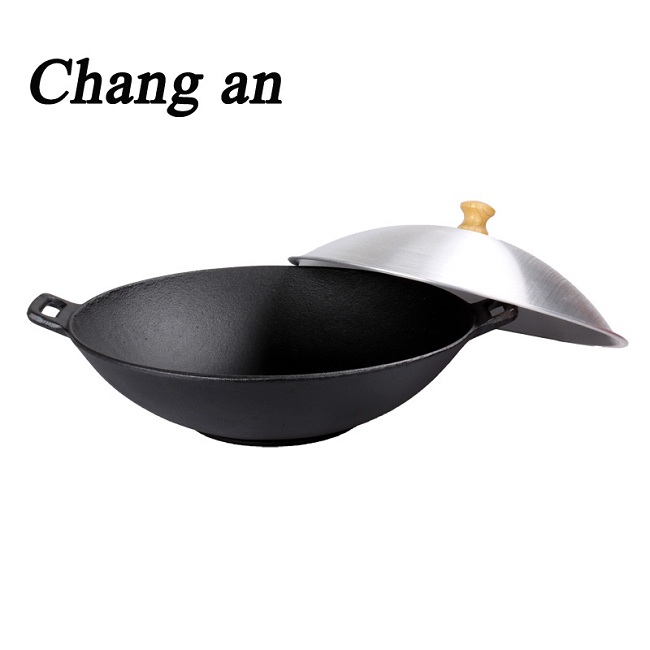
Product snapshot: Pre-seasoned Cast Iron Grill Pan
Origin: 150m Southwards, West DingWei Road, Nanlou Village, Changan Town, GaoCheng Area, Shijiazhuang, HeBei, China.
| Spec | Details (≈, real-world use may vary) |
|---|---|
| Material | Cast iron (ASTM A48 Class 30–35) |
| Finish | Seasoned carbonized oil or Enameled; matte black standard |
| Diameters | 24 cm / 30 cm, round, double handle |
| Wall/Weight | 3.8–4.2 mm; ≈2.2–3.4 kg |
| Covers | Glass / wooden / aluminum options |
| Heat Sources | Gas, electric, induction, oven (up to 260°C) |
| Pre-seasoning oil | Refined vegetable oil; solvent-free |
| Certifications | LFGB food-contact, FDA 21 CFR compliant, ISO 9001 plant |
| Service life | 10–25 years with care; enamel 5–10 if abused |
Process, testing, and real QA
Materials are cupola-melted pig iron + steel scrap, sand-cast, shot-blasted, CNC-trimmed. Seasoning is oven-cured, then a wipe test and adhesion rub per a modified ASTM D3359 approach (informal for seasoning). Dimensional tolerances are checked with go/no-go gauges; hardness spot-check ≈HB 170–200. Corrosion resistance is checked via 24–48 h humidity exposure for non-enamel units. Compliance: LFGB overall migration, and for enamel versions, ISO 4531 metal release.
Application scenarios and early wins
- Restaurants: high-turn steak, smash burgers, charred veg—fast preheat, reliable grill marks.
- Home kitchens: induction or gas; oven-finishing ribeyes to 52–55°C center.
- Outdoor: camp stoves and fire grates; just re-oil after ash exposure.
Case study: A Melbourne café swapped to 30 cm grill pans; after a proper pre seasoned cast iron skillet first use cycle, their chicken thigh yield improved ≈6% (less sticking), and cleanup time dropped ~12 minutes per service, per chef notes.
Vendor comparison (what to look for)
| Vendor | MOQ | Customization | Certs | Lead Time | QC/Traceability |
|---|---|---|---|---|---|
| FoundryAsia | ≈300–500 | Colors, logos, handles, covers | ISO 9001, LFGB, FDA | 30–45 days | Batch-coded molds; test logs |
| Generic Importer A | 1000+ | Limited | Varies | 60–75 days | Basic visual checks |
| Boutique Maker B | No MOQ | Extensive | Small-batch docs | 10–14 weeks | Serial-numbered |
Why it’s worth it
Advantages are simple: thermal mass, even heat, micro-textured browning. Do the pre seasoned cast iron skillet first use right, and you’ll get satin-slick performance within a week. Skip it, and, well, you’ll be chasing eggs with a scraper.
Quick testing data (typical)
- Flatness deviation: ≤0.5 mm across 30 cm
- Seasoning mass gain: ≈1.2–1.6 g/pan after factory cure
- Induction response: 0–200°C in ~140–180 s on 2.0 kW zone
Final note: if you’re gifting one, include a card with the pre seasoned cast iron skillet first use steps. It’s the difference-maker.
References:
- Lodge Manufacturing, Use & Care: Cast Iron, 2024.
- ISO 4531:2018, Metal release from ceramic and glass in contact with food.
- LFGB (Food and Feed Code, Germany) migration testing protocols.
- ASTM A48/A48M-03, Standard Specification for Gray Iron Castings.
- FDA 21 CFR, Food Contact Substance Notifications (general guidance).
-
China PC Light Cast Iron Wok Traditional Heat with Modern Weight
NewsApr.16,2026
-
Professional Guide to China Cleaning Cast Iron Wok Maintenance
NewsApr.09,2026
-
Explore the Benefits of a China Cast Iron Grilling Wok for Your Kitchen
NewsApr.07,2026
-
China Victoria Cast Iron Wok A Comprehensive Guide to Quality Cookware
NewsApr.04,2026
-
Discover the Superior Quality of China Enameled Cast Iron Wok Cookware
NewsMar.31,2026
-
Discover the Benefits of a China Cast Iron Wok with Lid for Authentic Cooking
NewsMar.28,2026