- 150m Southwards, West DingWei Road, Nanlou Village, Changan Town, GaoCheng Area, Shijiazhuang, HeBei, China
- monica@foundryasia.com
Oct . 16, 2025 11:40 Back to list
Light Weight Nonstick Cast Iron Enameled Skillet | Multi-Use
A Practical Take on the light weight nonstick cast iron enameled skillet Trend (with Real Specs and Factory Notes)
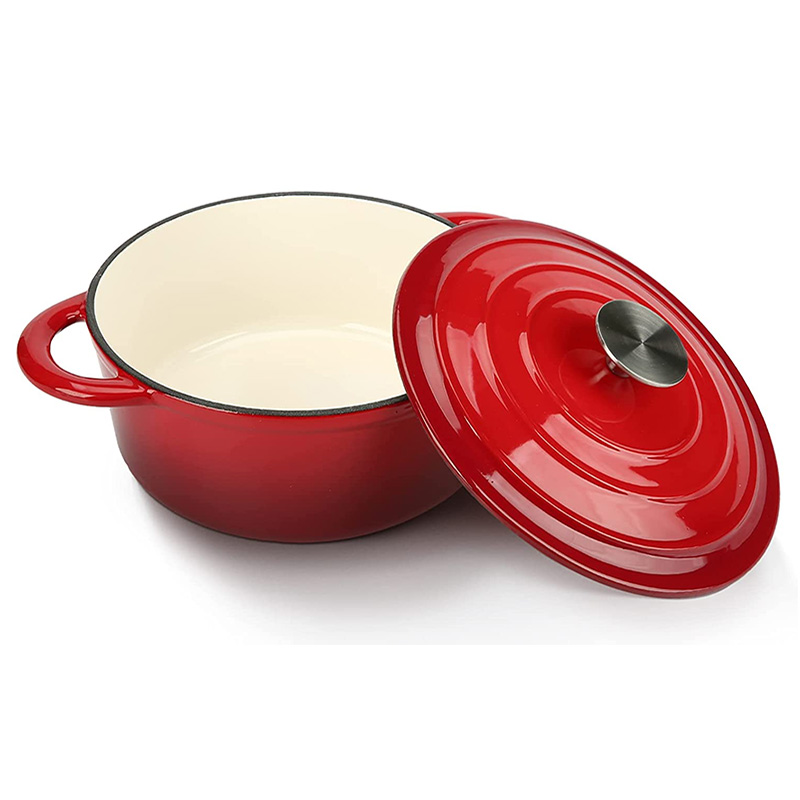
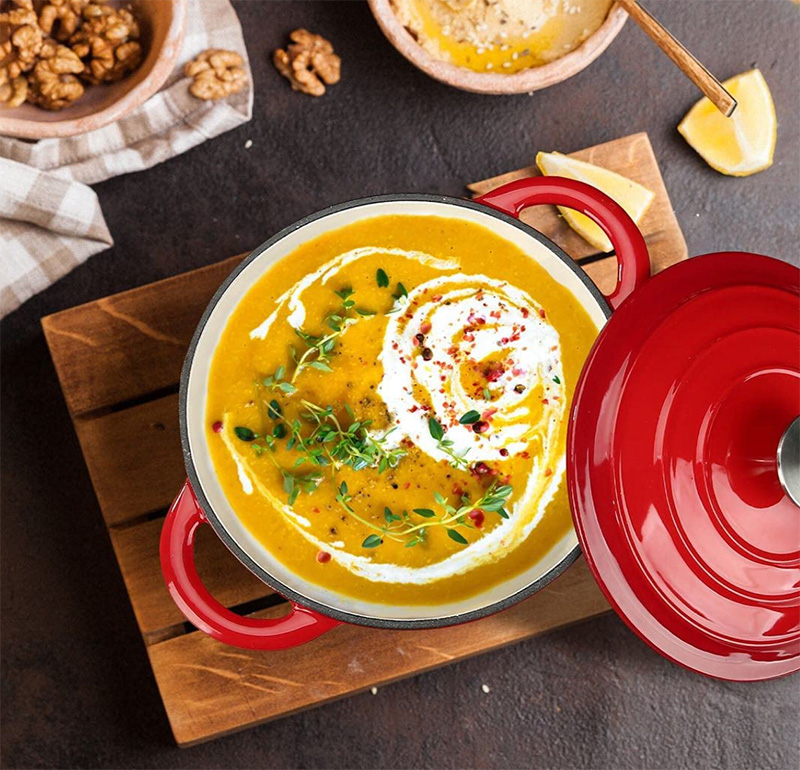
If you’ve been hunting for a lighter, PFAS-free pan that still browns like a champ, you’ve probably bumped into the light weight nonstick cast iron enameled skillet idea. Funny twist: the same enamel-and-iron tech powering skillets also powers compact Dutch ovens—like the 3 QT Cast Iron Dutch Oven, Enamel Round Dutch Oven Pot with Lid—from a factory in Shijiazhuang, Hebei, China (150m Southwards, West DingWei Road, Nanlou Village, Changan Town, GaoCheng Area). Different shapes, same metallurgy.
Why the industry is trimming weight
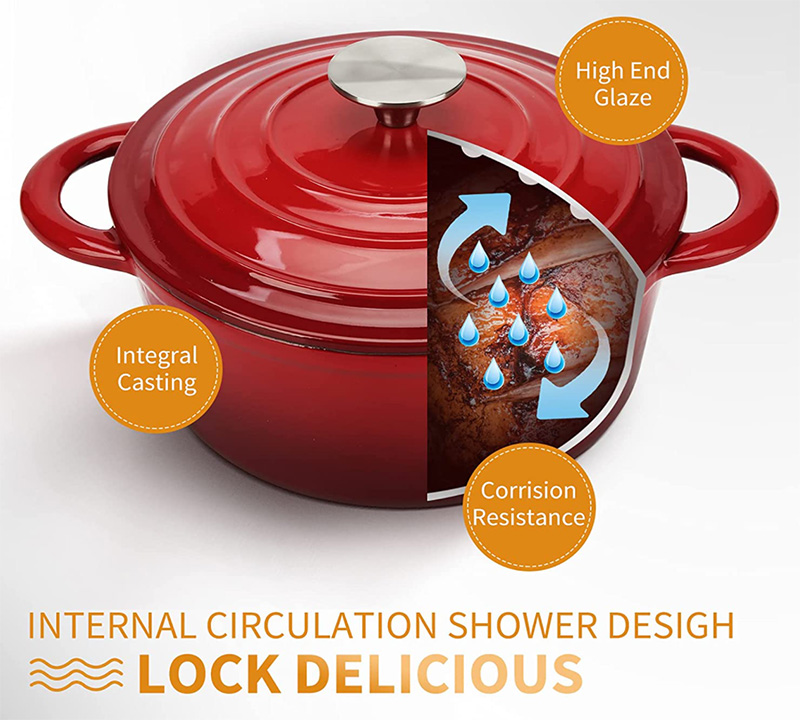
Two big shifts: 1) thinner, precision castings (still sturdy, but your wrist says “thank you”), and 2) advanced vitreous enamels that are glass-smooth, stain-resistant, and food-safe. In fact, many customers say they want the sear of cast iron without the seasoning ritual. That’s where modern enamel steps in—nonreactive, easy to clean, and it looks nice on a table. To be honest, lighter is relative; we’re shaving hundreds of grams, not turning iron into aluminum.
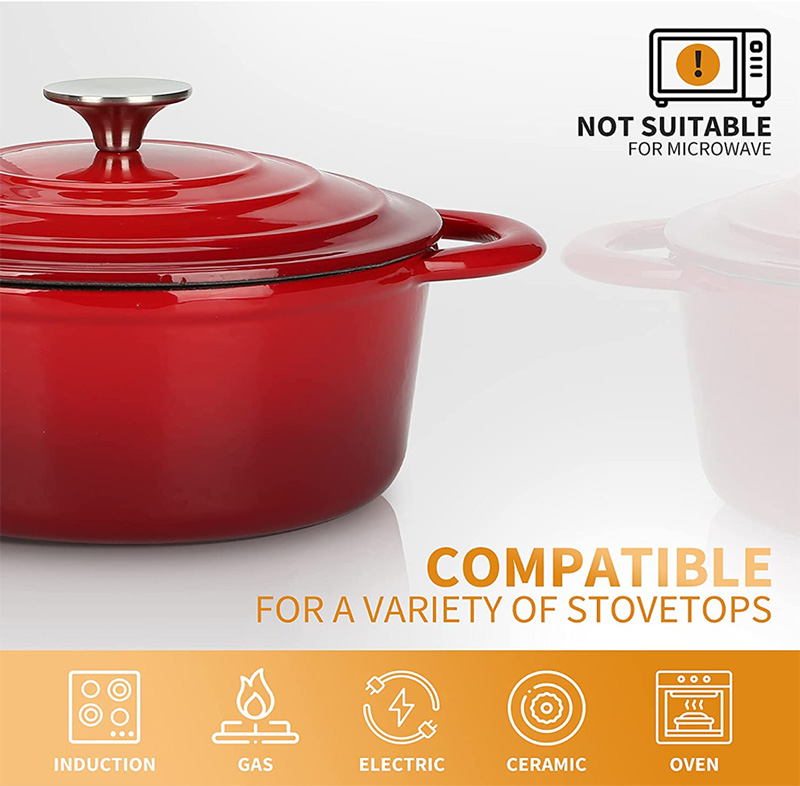
Product snapshot: 3 QT Enameled Round Dutch Oven (Skillet-Tech Inside)
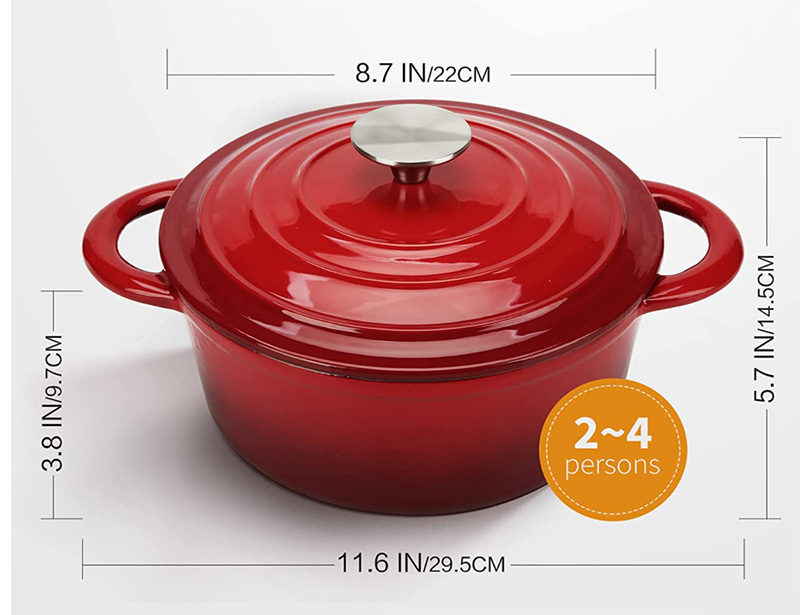
| Capacity | ≈ 3 QT (around 2.8 L) |
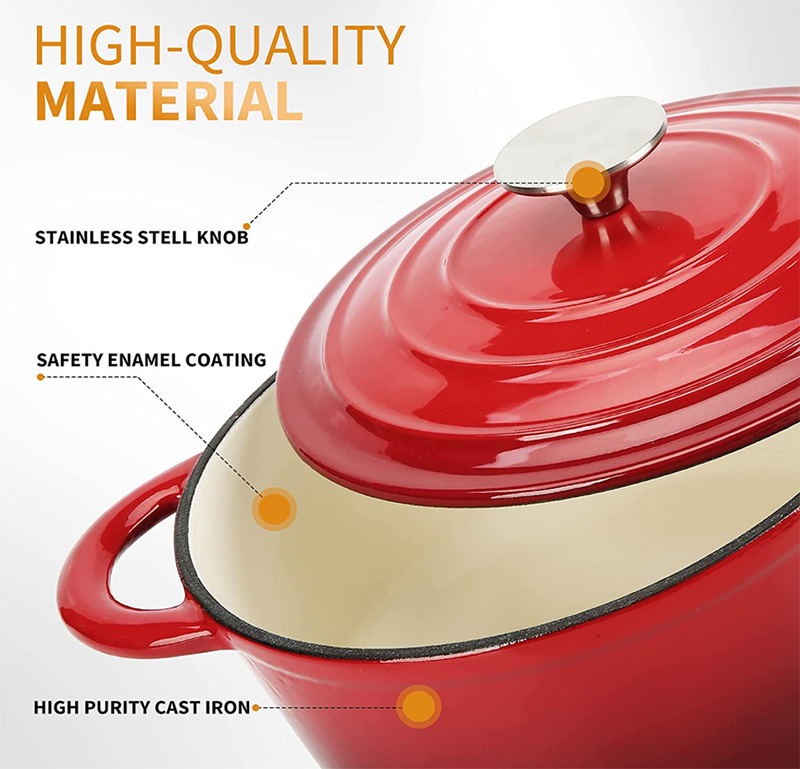
| Material | Gray cast iron, vitreous enamel (interior/exterior) |
| Wall/Bottom Thickness | ≈ 3.5–4.5 mm (real-world use may vary) |
| Diameter | ≈ 22–24 cm |
| Heat Sources | Gas, electric, ceramic, induction, oven-safe up to ≈ 500°F/260°C |
| Interior Options | Cream enamel or satin black enamel |
| Care | Dishwasher-tolerant; hand-wash recommended |
Factory flow (how the pan gets its “light but tough” feel)
- Materials: pig iron + recycled iron, tuned chemistry (per ASTM A48-certified gray iron practices).
- Melt & pour: induction furnace, controlled carbon/silicon; precision sand molds for thinner walls.
- Cleaning: shot-blast, CNC trim, surface prep.
- Enameling: ground coat + color coat; fired ≈ 760–840°C; thickness ≈ 200–350 μm.
- Testing: enamel adhesion (ISO 28706 methods), metal release (ISO 4531), thermal shock cycles, flatness, induction response.
- Service life: often 10+ years with normal kitchen use; chips can occur if dropped (it’s glassy enamel, after all).
Compliance, tests, and what the numbers usually look like
Reputable makers validate against ISO 4531 for metal release from vitreous enamels (lead/cadmium migration—ideally “ND” within method limits), plus EU 1935/2004 food-contact framework and, in Germany, LFGB §31. Domestic-use cookware safety often references EN 12983-1. I guess the headline is simple: third-party reports matter; ask for current test certificates.
Typical QC ranges we see: enamel thickness ≈ 250–320 μm; thermal shock endurance ≥ 50 cycles; coating adhesion passes chip-resistance criteria per ISO 28706 procedures. Actual values vary by color, firing curve, and batch.
Where it shines (and one quick case)
Applications: weeknight pasta, sourdough boules, 2–3 lb roasts; induction apartments; small cafés doing table-to-oven service. Many customers say the cream enamel helps them judge fond development better; others prefer black enamel for stealth searing.
Case in point: a 48-seat bistro (Midwest, name withheld) swapped heavy pans for a mix of compact Dutch ovens and a light weight nonstick cast iron enameled skillet. Line cooks reported faster station resets and an ≈ 12–18% cut in burner time during dinner rush. Not scientific, but the chef grinned.
Vendor landscape (custom colors and MOQ still rule)
| Vendor | Certs/Tests | Customization | Lead Time | Notes |
|---|---|---|---|---|
| Foundry Asia (Hebei) | ISO 9001; ISO 4531/LFGB test reports (on request) | Pantone colors, interior enamel, laser logo, box | ≈ 35–55 days | Competitive MOQs; steady enamel curve control |
| Generic Importer | Basic CoC; mixed third-party tests | Limited colors; standard box | ≈ 25–40 days | Lower price, variable QA |
| Premium EU Brand | Full EU compliance kit; in-house labs | Bespoke colors, knobs, gift packs | ≈ 60–90 days | Top glazing; higher price point |
Buying tips
- Ask for ISO 4531 migration reports and EN 12983-1 safety references.
- Check enamel around rims/handles; that’s where chips start.
- For a light weight nonstick cast iron enameled skillet, look for slightly thinner walls with flat, induction-friendly bases.
Authoritative references
- ISO 4531:2022 – Vitreous and porcelain enamels — Release of metals from enamelled articles in contact with food.
- EN 12983-1:2020 – Cookware for domestic use — General requirements.
- EU Regulation (EC) No 1935/2004 – Materials and articles intended to come into contact with food.
- LFGB §31 (Germany) – Food contact materials requirements.
- ASTM A48/A48M – Standard Specification for Gray Iron Castings.
-
Professional Guide to China Cleaning Cast Iron Wok Maintenance
NewsApr.09,2026
-
Explore the Benefits of a China Cast Iron Grilling Wok for Your Kitchen
NewsApr.07,2026
-
China Victoria Cast Iron Wok A Comprehensive Guide to Quality Cookware
NewsApr.04,2026
-
Discover the Superior Quality of China Enameled Cast Iron Wok Cookware
NewsMar.31,2026
-
Discover the Benefits of a China Cast Iron Wok with Lid for Authentic Cooking
NewsMar.28,2026
-
Exploring the Rich History and Value of China Antique Iron Wash Pots
NewsMar.26,2026