- 150m Southwards, West DingWei Road, Nanlou Village, Changan Town, GaoCheng Area, Shijiazhuang, HeBei, China
- monica@foundryasia.com
Oct . 23, 2025 12:20 Back to list
Cast Iron Casserole: Even Heat, Oven-Safe, Induction Ready
Field Notes on a Workhorse: Cast Iron Casserole for Modern Kitchens
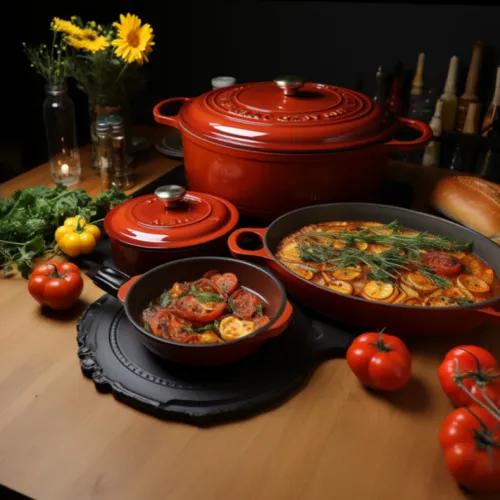
I’ve toured more factories than I can count, but the hum of enamel kilns in Changan Town, GaoCheng Area, HeBei, China sticks with me. The team behind the “Introducing Our Exquisite Cast Iron Enamel Four-piece Cookware Set” builds gear that chefs actually use, not just photograph. And yes, the Cast Iron Casserole is the quiet hero of the lineup, right alongside the deep sauté pan and dutch oven.
What’s in the box (and why it matters)
Set includes enamelled Cast Iron Casserole, deep sauté pan, and dutch oven. Honestly, the diameter mix hits most weeknight and weekend scenarios. Many customers say they use the 28 cm for breads and braises, and the 18 cm for sides or rice.
| Item | Size | Capacity (≈) | Weight (≈) | Temp Range | Notes |
|---|---|---|---|---|---|
| Cast iron stew pot | Dia28 × 13 cm | ≈ 6.0–6.5 L | ≈ 6.0–7.0 kg | Up to 260–280°C (lid limits may apply) | Braises, bread, stew for 4–6 |
| Cast iron casserole | Dia18 × 8 cm | ≈ 1.8–2.0 L | ≈ 2.0–2.8 kg | Up to 260–280°C | Sides, grains, compact bakes |
| Enameled deep pan | Dia30 × 6 cm | ≈ 3.0–3.5 L | ≈ 4.0–5.0 kg | Up to 260–280°C | Shallow fries, paella, searing |
Process, materials, and testing (the nerdy bit)
- Material: high-carbon grey cast iron (typ. 3.2–3.8% C, ~1.8–2.2% Si), sand-cast; shot-blasted.
- Enamel: multi-coat vitreous enamel, fired ≈ 780–820°C; thickness ≈ 200–400 μm.
- Compatibility: gas, electric, ceramic, induction; oven-safe (check knob spec).
- QC tests: enamel adhesion (cross-hatch), thermal shock per ISO 4530, lead/cadmium per EN ISO 4531, salt spray (48–72 h) for exterior hardware.
- Service life: ≈ 10–20 years with normal use; real-world use may vary.
- Origin: 150 m Southwards, West DingWei Road, Nanlou Village, Changan Town, GaoCheng Area, Shijiazhuang, HeBei, China.
Internal 2024-Q3 test snapshot: EN ISO 4531 migration — Pb
Where it excels
Restaurants lean on the Cast Iron Casserole for even heat and stubborn heat retention; home cooks like the enamel’s non-reactivity for tomato-based braises. I guess the only caveat is: preheat gradually and use medium heat—surprisingly, that’s where cast iron shines.
Vendor landscape (what buyers compare)
| Vendor | Enamel Thickness (≈) | Thermal Shock Cycles | Food-Contact Compliance | Customization |
|---|---|---|---|---|
| Foundry Asia (this set) | 200–400 μm | ≈ 25–35 pass (ISO 4530) | EN ISO 4531, LFGB, FDA 21 CFR (declared) | Colors, logos, knobs, gift box |
| Vendor A (import mix) | ≈ 150–300 μm | ≈ 20–30 | EC 1935/2004 (claimed) | Basic colors, limited SKUs |
| Vendor B (ODM) | ≈ 180–320 μm | ≈ 20–28 | Prop 65 (select lines) | Handles/knobs, MOQ higher |
Customization and compliance
OEM/ODM options: enamel colorways (matte, speckled), sand-cast logos, stainless or phenolic knobs, induction-optimized bases. Certifications upon request: ISO 9001, LFGB, EN ISO 4531 test reports; Prop 65 declarations available. In real kitchens, that paperwork speeds retail onboarding.
Mini case study
A mid-size bistro group in Guangzhou switched to the 28 cm dutch oven + Cast Iron Casserole combo for prep-to-serve. They reported ≈12% faster service on braised mains (better heat stability) and fewer pan-swaps during peak. Not a lab result, but the chef’s nightly log backs it up.
Trend watch
Demand skews toward durable, non-PTFE cookware with credible migration data. Actually, enamelled iron, once “grandma’s pot,” is the sustainability play now: long service life, repairable knobs, and recyclable iron at end-of-life. The Cast Iron Casserole is right on that curve.
- EN ISO 4531:2018 Vitreous and porcelain enamels — Release of lead and cadmium from enamelled articles in contact with food — Test method.
- ISO 4530:1981 Vitreous and porcelain enamels — Determination of resistance to thermal shock.
- Regulation (EC) No 1935/2004 on materials and articles intended to come into contact with food.
- California Proposition 65 (Safe Drinking Water and Toxic Enforcement Act of 1986) — consumer product exposure warnings.
-
China PC Light Cast Iron Wok Traditional Heat with Modern Weight
NewsApr.16,2026
-
Professional Guide to China Cleaning Cast Iron Wok Maintenance
NewsApr.09,2026
-
Explore the Benefits of a China Cast Iron Grilling Wok for Your Kitchen
NewsApr.07,2026
-
China Victoria Cast Iron Wok A Comprehensive Guide to Quality Cookware
NewsApr.04,2026
-
Discover the Superior Quality of China Enameled Cast Iron Wok Cookware
NewsMar.31,2026
-
Discover the Benefits of a China Cast Iron Wok with Lid for Authentic Cooking
NewsMar.28,2026