- 150 مېتىر جەنۇبقا ، غەربىي دىڭۋېي يولى ، نەنلو يېزىسى ، چاڭئەن بازىرى ، گاۋچېڭ رايونى ، شىجياجۇاڭ ، خېبېي
- monica@foundryasia.com
سېنتەبىر . 02, 2025 15:18 تىزىملىككە قايتىش
Enameled Cast Iron Wok: A Cooking Tool that Collides Tradition and Modernity
On the stage of Chinese cooking, the wok is an indispensable role, and Enameled Cast Iron Wok, with its perfect combination of enamel layer and cast iron, not only inherits the essence of traditional iron wok stir frying, but also integrates the practical characteristics of modern kitchen utensils, becoming a unique and charming cooking tool in the kitchen.
The material of Enameled Cast Iron Wok combines dual advantages
Enamel coated cast iron wok base material retains the characteristics of uniform thermal conductivity and strong heat storage performance of traditional iron pots, which can quickly reach high temperatures and meet the needs of Chinese stir frying "big fire quick stir frying", allowing ingredients to instantly lock in moisture and nutrients. The enamel layer covering the surface is made of glass material that has been sintered at high temperatures. It not only solves the problem of traditional cast iron pots being prone to rust and requiring complicated maintenance, but also gives the pot a smooth surface with certain non stick properties and resistance to acid and alkali corrosion. It can directly contact various food ingredients, including acidic foods such as tomatoes and vinegar.
The unique structural design allows Enameled Cast Iron Wok to adapt to various cooking scenarios
The cast iron wok pot adopts a deep curved design, with the pot edge slightly turned outward, which is convenient for stir frying with a spoon and can reduce oil fume overflow. The bottom of the pot is flat and thick, with a large heating area, suitable for various heat sources such as gas stoves and electric stoves, and can even be used in ovens to switch between cooking methods such as stir frying, stewing, frying, and baking. Some styles are also equipped with insulated handles, designed ergonomically for comfortable grip and excellent heat resistance, enhancing safety and convenience of use.
In terms of cooking performance, Enameled Cast Iron Wok demonstrates unique advantages
Due to the strong heat storage capacity of cast iron and the stable temperature of the pot, it can continuously provide sufficient heat during stir frying, allowing the ingredients to quickly ripen and maintain a fresh, tender taste and bright color. When stewing, the enamel layer can lock in the original flavor of the ingredients, making the soup more rich and mellow. At the same time, the cast iron wok pan enamel surface is smooth and easy to clean. After use, it only needs to be wiped with warm water and a soft cloth, without the need for complex pot maintenance steps like traditional iron pots, greatly simplifying the daily maintenance process.
There are also some details to pay attention to when using Enameled Cast Iron Wok
Although the enamel layer is tough, it should be avoided from sudden cooling and heating to prevent cracking. For example, do not immediately touch cold water on a hot pan that has just been stir fried. Hard tools such as steel wire balls should not be used during cleaning to avoid scratching the enamel layer and affecting its service life. In addition, due to the heavy weight of the pot, safety should be taken into account during use, and it should be placed steadily to avoid slipping.
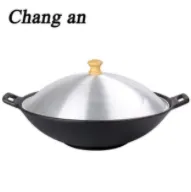
Cast Iron Stir Fry Wok has found a perfect balance between tradition and modernity with its unique blend of materials, clever structural design, and outstanding cooking performance. It not only continues the ultimate pursuit of fire in Chinese cooking, but also meets the modern family's needs for durability, easy maintenance, and versatility of kitchen utensils. Whether it's a lively stir fry or a slow simmering stew, this cookware can handle it with ease, becoming a bridge between traditional cooking techniques and modern lifestyle, adding more delicious possibilities to the kitchen.
Enameled Cast Iron Wok FAQs
Is Enameled Cast Iron Wok suitable for Chinese style stir frying?
Enameled Cast Iron Wok has excellent thermal conductivity and heat storage, but compared to traditional wrought iron pots, its heating rate is slower, and the enamel layer is not resistant to extremely high oil temperatures (such as exceeding 250 ℃, which may cause enamel cracks). Therefore, it is more suitable for slow stir frying, stewing, or deep frying over low to medium heat, rather than Chinese style stir frying that requires high heat and quick flipping. If you pursue a "pot atmosphere", traditional uncoated wrought iron pots are still the first choice, but the advantages of enamel pots are rust prevention, easy cleaning, and compatibility with acidic ingredients (such as tomato stewed beef brisket).
What should be noted for the maintenance of Enamel Cast Iron Wok?
Although the enamel layer is rust proof, it is afraid of sudden cold, heat, and collision with metal shovels. When using, avoid empty burning and preheat with low to medium heat when using a cold pot; When cleaning, wait for the pot to cool down and use a soft cloth and neutral cleaner. Do not use steel wire balls. If the food sticks to the bottom, soak it in warm water and gently scrub it. Long term storage without drying is necessary to avoid friction between enamel surfaces and hard objects. If the enamel on the inner wall falls off, it is recommended to stop using it (exposed cast iron may rust).
Why is there a significant price difference for Enamel Cast Iron Wok?
The price is influenced by enamel craftsmanship, cast iron quality, and brand. High end products such as Staub and Le Creuset are coated with multi-layer enamel and sintered at high temperatures, resulting in better wear resistance and longer lasting colors; The affordable version may have a thinner enamel layer and be prone to cracking. In addition, the thickness of the pot body (usually 35mm) and the enamel coverage range (including the pot edge) will also affect the cost. It is recommended to choose the inner wall dark enamel style (light colors are prone to stains).
Can Enameled Cast Iron Wok enter the oven?
The vast majority of enamel cast iron pots can withstand high temperatures in ovens (usually nominal heat resistance of 250400 ℃), but two points should be noted: first, confirm the material of the pot lid knob (plastic knobs need to be disassembled before entering the oven); The second is to avoid rinsing cold water directly after taking it out of the oven to prevent enamel cracking. In addition, styles with wooden or silicone handles may not be suitable, please pay attention to the product instructions when purchasing.
What are the advantages and disadvantages of Enamel Cast Iron Wok compared to non stick pans?
advantage:
Durability: The enamel layer has a lifespan far exceeding that of PTFE coating under normal use (generally more than 5 years).
Safety: No risk of chemical coating peeling off, can be cooked at high temperatures (such as frying steak).
Multi functional: Suitable for stir frying, stewing, grilling, and even serving as a dining plate directly on the table.
Disadvantages:
Weight: Usually more than 50% heavier than non stick pans, requiring high wrist strength.
Preheating required: It cannot be used immediately like a non stick pan, and the heat needs to be controlled.
High price: The entry-level model costs 5002000 yuan, which is 310 times more expensive than non stick pans.
-
China PC Light Cast Iron Wok Traditional Heat with Modern Weight
خەۋەرلەرApr.16,2026
-
Professional Guide to China Cleaning Cast Iron Wok Maintenance
خەۋەرلەرApr.09,2026
-
Explore the Benefits of a China Cast Iron Grilling Wok for Your Kitchen
خەۋەرلەرApr.07,2026
-
China Victoria Cast Iron Wok A Comprehensive Guide to Quality Cookware
خەۋەرلەرApr.04,2026
-
Discover the Superior Quality of China Enameled Cast Iron Wok Cookware
خەۋەرلەرMar.31,2026
-
Discover the Benefits of a China Cast Iron Wok with Lid for Authentic Cooking
خەۋەرلەرMar.28,2026