- 150 مېتىر جەنۇبقا ، غەربىي دىڭۋېي يولى ، نەنلو يېزىسى ، چاڭئەن بازىرى ، گاۋچېڭ رايونى ، شىجياجۇاڭ ، خېبېي
- monica@foundryasia.com
سېنتەبىر . 04, 2025 10:53 تىزىملىككە قايتىش
Enamel Coated Cast Iron Wok: A New Favorite in Cooking that Collides Tradition and Innovation
In the wave of kitchen utensil iteration, Enamel Coated Cast Iron Wok is based on traditional cast iron and incorporates enamel technology. It retains the thermal conductivity advantage of cast iron pots and solves maintenance problems with the characteristics of enamel layers, becoming a new choice in modern kitchens that combines practicality and aesthetics.
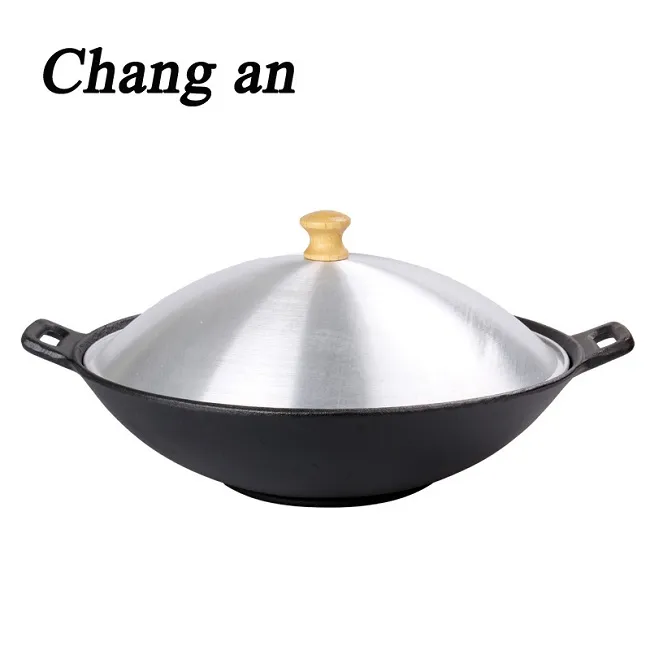
The unique material of Enamel Coated Cast Iron Wok is the key to its outstanding performance
The cast iron wok pot is made of thick cast iron as its core, ensuring excellent heat storage and conductivity, which can evenly heat the ingredients and lock in their original flavor. The enamel layer covering the outer layer is made of glass material sintered at high temperature. This dense protective film not only isolates cast iron from contact with air and moisture, solving the problem of ordinary cast iron pots rusting from the root, but also endows the pots with rich colors, from classic white and black to bright blue and green tones, making the kitchen utensils both functional and decorative.
The design of Enamel Coated Cast Iron Wok showcases ingenuity in every detail
The edges of the enameled cast iron wok have been specially treated for excellent sealing. When covered with a pot lid, it can create a slight pressure environment, reducing cooking time, especially suitable for dishes that require long-term heating such as stewing and braising. The pot bottom is flat and thick, suitable for various stoves, whether it is an open flame, electric ceramic stove or oven, it can work stably. The handle adopts an anti scald design, and some styles are also equipped with heat-insulating silicone sleeves to enhance safety. The streamlined pot body lines make it more comfortable to grip.
In the cooking scene, Enamel Coated Cast Iron Wok exhibits advantages different from ordinary cast iron pots
Due to the lack of oil absorption in the enamel layer, cast iron pan wok can easily handle heavy flavored ingredients such as sour, sweet, and spicy, without residual odors like ordinary cast iron pots. When frying food, the pot surface is smooth and not easy to stick to the bottom, and both fried eggs and fried fish can maintain their intact shape; When stewing, a slight pressure environment allows the ingredients to quickly enter the flavor, resulting in a thick and delicious soup. More importantly, it does not require frequent maintenance like ordinary cast iron pots, and can be easily cleaned after use, greatly reducing the maintenance threshold.
The maintenance method of Enamel Coated Cast Iron Wok differs significantly from traditional cast iron pots
When cleaning, you can directly use detergent and wipe with a sponge or soft cloth without worrying about damaging the enamel layer (but avoid using steel wire balls to scrape forcefully). After cleaning, simply wipe off the moisture and do not need to apply additional oil for maintenance. Even if it is idle for a short period of time, it is not easy to rust. However, although the enamel layer is hard, it is afraid of collision. When using, it is necessary to avoid severe impact on the pot body to prevent enamel from falling off and affecting performance.
Overall, cast iron flat wok has achieved breakthroughs in rust prevention, easy cleaning, and multi color through enamel technology while retaining the thermal conductivity advantages of traditional cast iron pots. It not only meets the convenience needs of modern cooking, but also integrates unique aesthetic values into kitchen life. It breaks people's inherent impression of cast iron pots as "bulky and difficult to maintain", becoming a bridge between traditional cooking wisdom and modern lifestyle, bringing more diverse delicious possibilities to family dining tables.
Enamel Coated Cast Iron Wok FAQs
Is Enamel Coated Cast Iron Wok suitable for Chinese style stir frying?
Although the cast iron wok coated with enamel has good insulation and corrosion resistance, the enamel layer is not resistant to sudden changes in high temperature (usually recommended not to exceed 250 ℃), and Chinese stir frying requires continuous high temperature (up to 300 ℃ or above). Long term high temperature may cause enamel cracking or peeling. In addition, the cast iron pot has a heavy body and is not as flexible as a cooked iron pot when stir frying. If pursuing health and low oil fume, it can occasionally be used for cooking on medium and low heat, but professional chefs still tend to choose uncoated wrought iron pots.
How to clean Enamel Coated Cast Iron Wok to avoid damaging the coating?
Although enamel coating is wear-resistant, it is afraid of sharp scratches. It is recommended to clean with a soft cloth or sponge dipped in neutral detergent after cooling. Stubborn stains can be gently scraped off by boiling water. Avoid using steel wire balls, hard cleaning agents, or sudden cooling and heating. After washing, wipe dry to prevent rusting of the pot bottom (especially the exposed cast iron part). If the coating falls off, the partially exposed cast iron may rust, and it needs to be dried and treated with edible oil in a timely manner.
What are the advantages and disadvantages of Enamel Coated Cast Iron Wok compared to ordinary cast iron pots?
Advantages: The enamel layer isolates cast iron from food, prevents rust, and does not require boiling or cooking; Beautiful in multiple colors; Acid resistant ingredients (such as tomatoes and vinegar) are not easily corroded. Disadvantages: High price (brand models can reach up to a thousand yuan); Heavy weight (usually 35kg); Not resistant to high temperature stir frying; Difficult to repair after coating damage. Ordinary cast iron pots require regular maintenance but are resistant to high temperatures, making them suitable for users who pursue pot gas.
Can Enamel Coated Cast Iron Wok enter the oven?
Most Enamel Coated Cast Iron Wok can withstand high temperatures in ovens (generally labeled as heat-resistant at 260 ℃ and 400 ℃), but it is important to note that the handle material should be checked - metal handles are usually safe, as they may melt if made of electric wood or plastic; Avoid rinsing with cold water directly after removing from the oven to prevent enamel cracking. In addition, for styles with glass covers, it is necessary to confirm whether the cover is heat-resistant.
Why is there a significant price difference for Enamel Coated Cast Iron Wok?
The price is influenced by the brand (such as the high premium of Le Creuset), enamel technology (double-layer spraying for more uniform coating), cast iron purity (less impurities and less prone to cracking), and origin (high production cost in France/Japan). Low priced models may have thin enamel that is prone to color cracking, or uneven thickness of the pot body. It is recommended to choose a style with thickened pot bottom (3mm or more) for more stable thermal conductivity, but the budget needs to be increased to over 500 yuan.
-
China PC Light Cast Iron Wok Traditional Heat with Modern Weight
خەۋەرلەرApr.16,2026
-
Professional Guide to China Cleaning Cast Iron Wok Maintenance
خەۋەرلەرApr.09,2026
-
Explore the Benefits of a China Cast Iron Grilling Wok for Your Kitchen
خەۋەرلەرApr.07,2026
-
China Victoria Cast Iron Wok A Comprehensive Guide to Quality Cookware
خەۋەرلەرApr.04,2026
-
Discover the Superior Quality of China Enameled Cast Iron Wok Cookware
خەۋەرلەرMar.31,2026
-
Discover the Benefits of a China Cast Iron Wok with Lid for Authentic Cooking
خەۋەرلەرMar.28,2026