- 150 مېتىر جەنۇبقا ، غەربىي دىڭۋېي يولى ، نەنلو يېزىسى ، چاڭئەن بازىرى ، گاۋچېڭ رايونى ، شىجياجۇاڭ ، خېبېي
- monica@foundryasia.com
سېنتەبىر . 04, 2025 10:47 تىزىملىككە قايتىش
Cast Iron Frymans: The Creator of Charcoal Fragrance in the Stove
In the bustling kitchen world, Cast Iron Frypans have become the soulmate of pan fried dishes with their tough texture and unique cooking magic. Unlike cast iron stew pots that specialize in slow stewing, it relies on its strong thermal conductivity and heat storage to leave a burnt aroma mark on ingredients during high-temperature roasting, giving dishes a distinct taste experience.
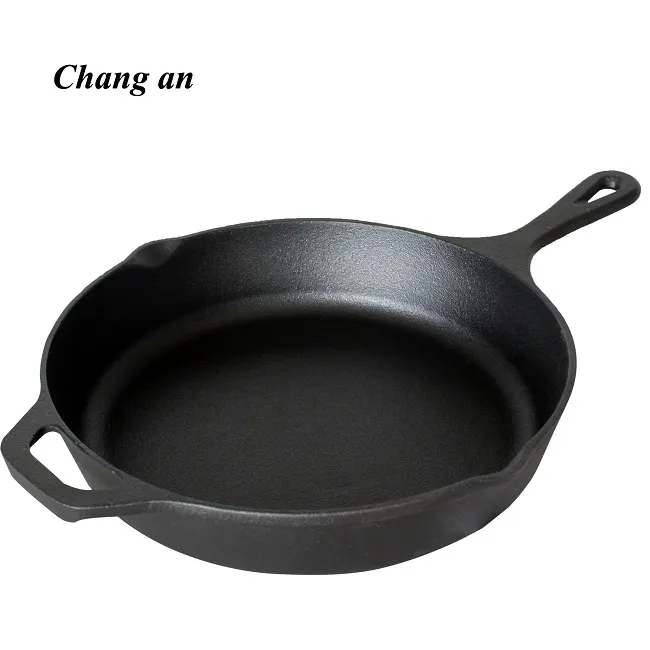
The structural design of Cast Iron Frymans embodies practicality in every aspect
The cast iron frying skillet body adopts an integrated casting process, with a thick bottom and gradually thinner towards the edge of the pot, which can quickly absorb the heat source temperature and evenly transmit it to the entire pot surface. The pot type is mostly shallow bottomed and open, which facilitates the flipping of ingredients and heat dissipation, and is suitable for fast cooking methods such as frying, stir frying, and braising. The surface of the pot retains the natural rough texture of cast iron, and the oil film formed after opening and curing the pot not only prevents rust and durability, but also makes the ingredients non stick to the pot and have a burnt flavor. Some styles are equipped with long handles, which are heat-insulating and heat-resistant, making it easy to hold and shake pots, and suitable for various stoves.
The performance advantages of Cast Iron Frypans are particularly significant in high-temperature cooking
Cast iron frying pot can withstand extremely high temperatures, and the pot surface can easily reach over 200 ℃, allowing the steak surface to quickly char and form a charred outer shell, locking in the internal meat juice; At the same time, the powerful heat storage capacity ensures temperature stability and avoids uneven heating of ingredients due to fluctuations in firepower. In addition, cast iron material releases trace amounts of iron during the cooking process, adding nutrients to dishes, especially suitable for people with iron deficiency.
From home style breakfast to exquisite cuisine, Cast Iron Frypans have a wide range of applicable scenarios
When frying eggs, ce cast iron skillet can make the edges of the egg white golden and slightly charred, while keeping the yolk in a flowing state; When baking Cong you bing, the even heat of the pan surface makes the cake crisp outside and tender inside, with clear layers; When frying and grilling seafood, high temperatures quickly lock in moisture, making the shrimp meat firm and elastic, and the shellfish fresh, tender, and juicy. Whether it is western style bacon fried eggs or Chinese style Potsticker fried dumplings, Cast Iron Frypans can give the ingredients a unique burnt taste with high temperature roasting.
Using Cast Iron Frymans requires mastering unique maintenance techniques
For the first use, it is necessary to thoroughly clean with dishwashing detergent, dry on low heat, apply cooking oil to soak the surface of the pot, and complete the boiling process. When cooking, it is necessary to preheat the pot to a smoking state before adding oil, which can effectively prevent sticking to the bottom. When cleaning, avoid using cold water to suddenly heat the pot to prevent cracking of the pot body. Stubborn stains can be removed by wiping with coarse salt. When not in use for a long time, wipe off the moisture and apply a thin layer of oil. Store it in a dry place to make the oil film on the pot surface more perfect, and the longer it is used, the more comfortable it will be.
Compared to the warm and inclusive cast iron stew pot, cast iron skillet frying pan is more like a passionate and unrestrained cooking partner. It uses high temperature as a pen to depict burnt aroma patterns on the surface of ingredients, locking in the natural flavor of the food with stable heat, and transforming the passion of the stove into a stunning sensation on the tongue. From the sizzling sound of frying meat to the golden and crispy surface of food, Cast Iron Frypans interprets the fireworks of cooking in the most direct way, becoming a bridge between ingredients and deliciousness, and interpreting the legend of hot and spicy cuisine on the square stove.
Cast Iron Frypans FAQs
1: Why is Cast Iron Frypan called a 'kitchen heirloom'?
Cast Iron Frypans are named after their long service life - Adequate maintained, it can last for generations. Its material is cast from molten iron, and the uncoated design avoids the peeling and aging of PTFE pots. The Cast Iron Frymans carried by American pioneers in the 18th century are still in use today. In daily use, iron molecules gradually penetrate into food to form a "natural non stick layer", and the longer the use, the better the performance. Unlike modern non stick pans that need to be replaced every 23 years, century old Cast Iron Frymans can still be sold at high prices in the antique market, truly realizing the concept of "more valuable with more use".
2: Why do newly purchased Cast Iron Frymans need to be cooked? How to scientifically cook?
Boiling is a necessary process of forming a protective layer on the metal surface through the polymerization of oil. Specific steps:
- Use a wire brush to remove the factory anti rust wax, and dry at 200 ℃ for 15 minutes
- Flaxseed oil (high smoke point) should be evenly applied both inside and outside, so thin that it feels like it has been wiped but not yet
- Invert and place in a 230 ℃ oven for 1 hour, repeat 3 times
During this process, polymerization reactions occur, where oil molecules break down and combine with iron to form a black, glossy rust proof layer. Professional chefs suggest frying bacon 5 times after the first pot is cooked, and further filling the metal micropores with animal fat.
3: Can Cast Iron Frypans really supplement iron elements?
Scientific research has confirmed its effectiveness:
When cooking acidic foods (such as tomato sauce), the amount of iron migration can reach 35mg/100g
An experiment conducted by the Journal of Food Science in the United States showed that boiling apple sauce with Cast Iron Frymans can increase iron content by 8 times
Suitable for people with iron deficiency anemia, but patients with hemochromatosis should avoid it
Please note that only bare Cast Iron Frypans that have not been enameled have this effect, and the new pot releases the maximum amount of iron in the first half of the year. Adding acidic media such as lemon juice during cooking can increase the iron precipitation rate by 27%.
4: Why do professional steakhouses prefer Cast Iron Frypans?
Three irreplaceable advantages:
- Heat capacity effect: A 3cm thick pot bottom can store 1.8 times more heat than a stainless steel pot. After adding steak, the temperature only drops by 11 ℃ (the stainless steel pot drops by 43 ℃), ensuring that the Maillard reaction occurs fully
- Radiative heat conduction: The infrared radiation rate of cast iron is 2.3 times that of other metals, and it can penetrate deep layers of meat
- Physical non stick: Teflon will decompose at high temperatures of 500 ℃, while Cast Iron Frypansreach their optimal non stick state when burned to smoke
Thomas Keller, Michelin 3-star three-star chef, once demonstrated that frying steak with Cast Iron Frypans can achieve the restaurant level effect of "being burnt outside and tender inside", and the key is to first empty cook for 20 minutes to reach above 200 ℃.
5: How to deal with severe corrosion of Cast Iron Frymans?
Hierarchical repair plan:
Mild rust spots (<5% area): Soak in a 1:1 white vinegar solution for 10 minutes, then scrub with coarse sea salt and potato peel
Moderate corrosion: The angle grinder is equipped with a steel wire wheel (80 mesh) and polished until the original metal color is exposed. Immediately apply oil to prevent secondary oxidation
Severe rust penetration: requires professional casting factories to repair welding with oxyacetylene flame, but the cost often exceeds the price of a new pot
Special case: In the 1900s, there were "fire pits" on the surface of old pots, which can actually store more oil and belong to the "historical imprints" that can be preserved. After repair, the pot needs to be boiled again, and oil should be applied and maintained once a month for the first 3 months.
-
China PC Light Cast Iron Wok Traditional Heat with Modern Weight
خەۋەرلەرApr.16,2026
-
Professional Guide to China Cleaning Cast Iron Wok Maintenance
خەۋەرلەرApr.09,2026
-
Explore the Benefits of a China Cast Iron Grilling Wok for Your Kitchen
خەۋەرلەرApr.07,2026
-
China Victoria Cast Iron Wok A Comprehensive Guide to Quality Cookware
خەۋەرلەرApr.04,2026
-
Discover the Superior Quality of China Enameled Cast Iron Wok Cookware
خەۋەرلەرMar.31,2026
-
Discover the Benefits of a China Cast Iron Wok with Lid for Authentic Cooking
خەۋەرلەرMar.28,2026