- 150 مېتىر جەنۇبقا ، غەربىي دىڭۋېي يولى ، نەنلو يېزىسى ، چاڭئەن بازىرى ، گاۋچېڭ رايونى ، شىجياجۇاڭ ، خېبېي
- monica@foundryasia.com
سېنتەبىر . 04, 2025 10:40 تىزىملىككە قايتىش
Cast Iron Casserle Pot: The Taste Magician in Slow Stewing Time
In the kitchenware family, the Cast Iron Casserole Pot has become a classic artifact that embodies slow food culture with its heavy body and unique cooking magic. Unlike cast iron pots that focus on frying and baking, it is known for its airtightness and heat storage, allowing ingredients to slowly blend in a constant temperature environment, resulting in a rich and mellow taste.
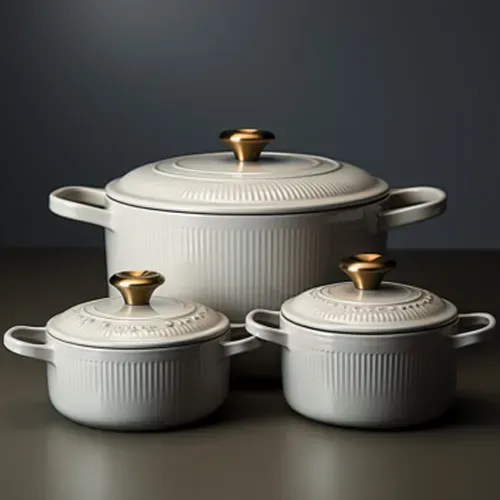
The construction of Cast Iron Casserle Pot hides ingenuity
The cast iron oven adopts an integrated casting process, with a uniform wall thickness and a thickness of 35 millimeters thicker than ordinary cookware. The lid and body of the pot fit tightly together, forming a nearly sealed space. The inner side of the pot lid usually has raised patterns that can condense steam into water droplets and evenly drip them back into the pot, achieving a "circulating water replenishment" effect and avoiding ingredients from drying out due to prolonged stewing. The inner wall of the pot body is mostly rough and textured, and with increasing use, a natural oil film will form, which not only prevents rust but also makes the stew flavor more mellow. Some styles have grooves designed along the edge of the pot, allowing for the placement of wet towels to further enhance sealing. These details make it an ideal carrier for slow stewing.
The performance advantages of Cast Iron Cassesole Pot are fully demonstrated during the stewing process
The excellent heat storage capacity of cast iron pan casserole can keep the temperature inside the pot stable for a long time, even after turning off the heat, it can continue to keep warm for 12 hours, allowing ingredients to continue to taste in the remaining temperature. The highly sealed pot body locks in steam and aroma, preventing the loss of moisture and nutrients from ingredients, making it particularly suitable for stewing dishes that require long-term heating. In addition, the cast iron material can evenly transmit heat to prevent local overheating from causing food materials to burn, so that each piece of food can fully absorb the essence of soup.
From home cooked stew to classic dishes, the Cast Iron Casserole Pot has a wide range of applications
Stewed Braised pork belly with stew pot cast iron can make the meat slowly crisp and rotten at constant temperature, and the sauce is thick wrapped on the meat, fat but not greasy; When stewing aged soup, a stable temperature allows the freshness and flavor of the ingredients to be fully released, resulting in a clear and mellow soup color; Even used for stewing mixed grain rice, the bottom of the pot will form a layer of crispy and fragrant crust, carrying a unique grain aroma. Whether it's Chinese nourishing soup or Western stewed dishes, it can give ingredients the most authentic taste with its constant temperature characteristics.
There are unique methods and maintenance techniques for using Cast Iron Cassesole Pot
For the first use, it is necessary to soak in warm water to remove casting residues, dry over low heat, and apply grease for pot curing. When stewing, it is advisable to use medium to low heat, utilizing its heat storage properties to slowly increase the temperature and avoid the sticky ingredients at the bottom of the pot caused by high heat. Rinse with hot water after use. If there are stubborn stains, soak them and gently wipe them. Do not use a steel wire ball for violent cleaning. After each use, wipe off the water and dry over low heat with a thin layer of oil to gradually form an oil film on the pot. The more you use it, the more comfortable it becomes, and the more fragrant the stewed food becomes.
Casserole cast iron dish is different from the "warmth" of a frying pan, as it interprets another possibility of cooking with "calmness". The thick pot not only locks in steam and temperature, but also the flavor of the ingredients blending over time. From the gurgling stew to the slowly simmering thick soup, it uses constant temperature protection to release the best flavor from every ingredient. This cooking philosophy, which does not pursue speed and focuses on fire and time, makes it a tool for conveying warmth in the kitchen. In the slow simmering time, it boils out the richness and beauty of life.
Cast Iron Casserole Pot FAQs
What kind of dishes is Cast Iron Cassesole Pot suitable for?
Cast Iron Casserole Pot is particularly suitable for slow stewed dishes, such as Braised pork belly in brown sauce, beef brisket with tomato, and chicken stewed in French red wine, due to its excellent heat preservation and uniform heating characteristics. The thick lid of the pot can lock in moisture, allowing ingredients to fully flavor during low-temperature slow cooking. In addition, it can also be used for baking bread, stewing soup, and even directly baking rice in the oven, making it very convenient to use in one pot.
-
How to properly boil and maintain a Cast Iron Casserole Pot?
The newly purchased cast iron pot needs to be "boiled" to form a rust proof oil film: after cleaning, dry on low heat, apply a layer of edible oil (such as flaxseed oil) on the inside and outside, put in the oven at 200 ℃ for 1 hour, cool down, and wipe off excess oil. After daily use, avoid soaking in detergent for a long time and apply a thin layer of oil to prevent rust after drying. If there is slight rust, it can be polished with baking soda and reheated.
What are the advantages and disadvantages of Cast Iron Casserole Pot compared to regular non stick pans?
Advantages: Cast iron pots are durable and have a lifespan of several decades; Strong heat storage, suitable for long-term stewing; Can withstand high temperature frying (such as steak); The enamel layer does not require frequent maintenance. Disadvantages: Heavy weight (usually 35kg); Slow preheating; Bare cast iron models require rust prevention; The price is relatively high, especially for well-known brands such as Le Creuset.
Why is the dish cooked with Cast Iron Cassesole Pot more fragrant?
This is related to the material properties: the thick wall of cast iron can allow heat to slowly penetrate, making the ingredients evenly heated from the inside out, especially suitable for releasing collagen from meat. In addition, the micro pores on the inner wall of enamel can adsorb food oils and fats, and long-term use will form a "natural seasoning layer" (similar to the principle of a clay pot), enhancing the flavor layering.
-
What parameters should be considered when choosing a Cast Iron Casserole Pot?
Enamel process: Check whether the inner wall is smooth and free of bubbles, as inferior enamel is prone to detachment.
Capacity: 35 liters suitable for a family of 35 people, too large can lead to uneven heating due to insufficient food.
Pot lid design: It is best to choose a sunken pot lid (such as Staub's nail shaped design), which can promote water circulation.
Handle material: Metal handle can enter the oven, but it needs to be heat-resistant; Phenolic resin handle has slightly lower heat resistance but good insulation.
Brand difference: High end brands (such as Le Creuset) have more wear-resistant glaze, and affordable alternatives can be found in domestic brands such as NetEase Yanxuan or Beiding.
-
China PC Light Cast Iron Wok Traditional Heat with Modern Weight
خەۋەرلەرApr.16,2026
-
Professional Guide to China Cleaning Cast Iron Wok Maintenance
خەۋەرلەرApr.09,2026
-
Explore the Benefits of a China Cast Iron Grilling Wok for Your Kitchen
خەۋەرلەرApr.07,2026
-
China Victoria Cast Iron Wok A Comprehensive Guide to Quality Cookware
خەۋەرلەرApr.04,2026
-
Discover the Superior Quality of China Enameled Cast Iron Wok Cookware
خەۋەرلەرMar.31,2026
-
Discover the Benefits of a China Cast Iron Wok with Lid for Authentic Cooking
خەۋەرلەرMar.28,2026